


Community Evidence of Development Harms
The Counterdocket is an initiative to bring together communities resisting extractive development. The stories shared here are a living resource documenting the gap between the promises made in the name of ‘development’ and what communities face in reality, harm that is often ignored or excluded from official records.
Through testimonies from across the world, communities name the harm caused by extractives, including land grabs, displacement, privatisation, labour exploitation, and debt, while also showing us what real alternatives could look like. This platform is an effort to connect these local struggles into a growing cross-border movement against extractives.
Together, we can claim a just future.
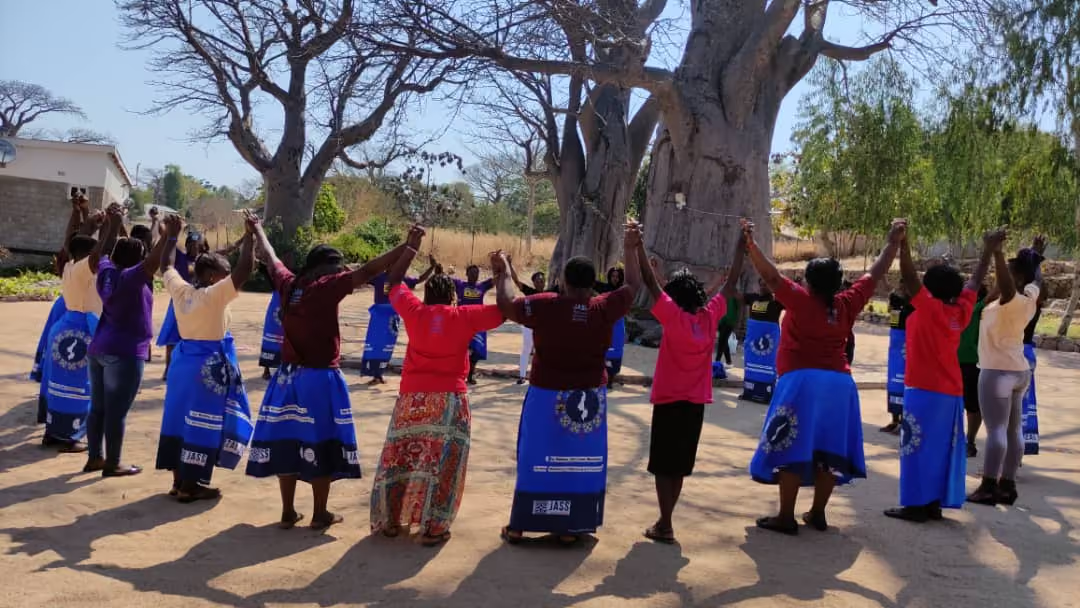
You share your story. You build the evidence.
Lived experience is evidence and affected communities, and women at the heart of them, are the experts.
For too long international institutions have decided whose experiences count as evidence. By building this living record of testimonies, we are flipping that script.
Instead of waiting for governments and international institutions to respond and act, we can...


MTerra Solar Project, Philippines
Infrastructure and energy projects
Presented by Mary Jane Mabalay, from General Tinio, Nueva Ecija, Philippines, a member of the Bayanihang Magsasaka ng Sanilo Association, Incorporated.
World Bank’s Energy Transition and Climate Resilience (ETCR) program in the Philippines is a programmatic series of Development Policy Loans (DPL) designed to support government reforms in clean energy and water management. This is a policy loan, not a stand alone World Bank funding. The testimony shares the impacts of a related project focused on solar power as part of energy transition programs of the country. Rather than funding a single physical construction project, the DPL mechanism supports sweeping policy actions, institutional reforms, and market operationalization.
THE PROJECT
My farmland is located in Sitio Sanilo, Macabaclay, Gapan City, Nueva Ecija. We grow various vegetables here, such as string beans, okra, eggplant, and other vegetables, as well as fruit-bearing plants and other crops.
We were living peacefully and quietly on our farmlands until one major problem arose: a company began encroaching upon our land and destroying our crops. They are seizing our farmlands for the MTerra Solar Project.
They made promises to the farmers, providing jobs, 10,000 jobs they say they can offer to farmers. Low electricity prices and clean energy, those are the promises made to the farmers, and they remain just promises.
The MTerra Solar Project covers 3,500 hectares in Phase 1, and 7,000 hectares with the implementation of Phase 2. This can be seen in different areas of Nueva Ecija.
IMPACT ON COMMUNITIES
There have been many changes in our daily living. Our farmland has been affected by the project. We no longer have any crops, as they were destroyed and run over by the heavy equipment of the land grabbers.
We can no longer make use of our crops. The intense heat is damaging, and we no longer harvest anything. We have no water pumps, and we live with nothing for our daily needs, no jobs, no food.
This situation is caused by the MTerra Solar Project. We have been experiencing intense heat in the morning, afternoon, and at night. Plants are almost dying, and livestock such as pigs, chickens, and the trees that serve as habitat are being destroyed. Many people are falling ill. The elderly, in particular, cannot withstand the extreme heat.
As a female farmer fighting for our rights, I am facing harassment and trumped-up charges against me, such as frustrated murder and theft, solely to force us to leave our farmlands. But we continue to stand firm to fight and defend our rights. When we go to court to defend our rights against those trying to seize our lands, we are powerless, even when we try to make them listen.
The law belongs to the local government and to them, not to the people.
WHAT WE WANT
If I were to decide and shape what my community looks like, my priorities would be food security, health, and education for every person. I would ensure that every citizen has food on the table daily, and that no one loses the agricultural livelihood that serves their daily needs. My community would be peaceful and prosperous. I pray that all obstacles facing our farmland may finally come to an end. There are people willing to help us, people who are also fighting to protect their own lands.

Platform Work and the Digital Economy, Thailand
IMF-World Bank Labor Agenda
Our community consists of women working across various digital platforms in Thailand, including food delivery riders and care workers. We make our living through app-based work, but we face severe challenges such as unstable income, lack of social protection, un-transparent algorithms. Our key resources are our mutual aid support, grassroots solidarity, and our collective voice demanding labor rights, social protection and social dialogue to ensure Decent work and democracy.
When people talk about the digital economy, they often talk about technology, innovation, investment and economic growth. People also often say that platform work is flexible, and it is true that we can sometimes choose when to work.
But I ask: what about the workers behind the digital economy?
Every day, riders go out on the road to deliver food and goods. We use our own motorcycles. We pay for our own fuel and maintenance. We take the risks on the road. Our income can change from day to day.
For many riders, we have to work for many hours because our income is not enough for our daily living costs. If there are fewer orders, our income goes down. If we have an accident, we may not be able to work, and if we cannot work, we may lose our income. This is a very serious problem for workers who depend on daily income. Flexibility does not always mean security.
For women riders, there are other problems too. Some women have children and family members to take care of, so we have two responsibilities: we have to earn money, and we also have to take care of our families. Many of us carry unpaid care work at home while also working to earn money. Some women face harassment from customers. Some have to work while worrying about the safety of their children and families.
We also face a lack of social protection and algorithms that are not transparent, and we cannot always understand how decisions that affect our income are made.
A delivery rider is not only a person behind a motorcycle. We are workers. We are mothers. We are caregivers. We are members of our communities. And we are part of the economy.
We need to look at the digital economy from the workers' side. Who benefits from the digital economy? Who carries the risks? And who is protected when something goes wrong? Economic development should not only be measured by investment, technology or the number of digital platforms. We should also look at workers' lives. Do workers have decent work? Do they have social protection? Can they organize and speak together? Can they understand how decisions that affect their income are made? And do women have equal protection and opportunities?
Our Counter-Docket is not only about saying “no.” It is about saying what workers need. We want decent work for platform workers. We want social protection when workers are sick, injured or unable to work. We want fairness and transparency in the platform systems and algorithms that affect our work and income. We want freedom of association, so workers can organize and speak collectively. We also want gender-responsive policies, because women workers have different responsibilities and risks. And most importantly, we want workers to have a voice in decisions about our future.
We are not against technology. We are not against the digital economy. We want a digital economy that works for people. For us, real development means that technology and economic growth must also improve people's lives. We want an economy where workers do not carry all the risks alone. We want decent work, social protection, and gender equality. We want workers at the table when decisions about our future are made.
When governments, international financial institutions and other stakeholders discuss economic development, we ask them to listen to the people who work in that economy every day. Do not only ask how much the economy can grow. Also ask: How are workers living? Who is protected? And who has a voice?
Nothing about workers should be decided without workers.
Sentani Airport and the Transformation of Buyaka Ancestral Land, Indonesia
War and Militarisation
Presented by Yokbeth Felle of FAMM Papua, a third-generation Papuan from the Sentani/Buyaka clan. The Sentani people (or Buyaka, "Bu" meaning water, "yaka" meaning visible), an indigenous community on the shores of Lake Sentani, Jayapura, West Papua.
The Buyaka (Sentani) people are an indigenous community whose identity and livelihood are tied to Lake Sentani, on whose shore they live, in Jayapura, West Papua. Historically, the community migrated from what is now Papua New Guinea to settle their present territory. The speaker describes herself as a third-generation Papuan who inherited stories of poverty and upheaval dating to Indonesia's 1969 annexation of West Papua (following PEPERA, the "Act of Free Choice") and the subsequent Repelita development era, during which Suharto's government pursued agricultural modernization (the Green Revolution) and a large-scale transmigration program relocating hundreds of thousands of households from Java and elsewhere into Papua. This transmigration, alongside land certification programs converting communal land into private property, reshaped Papua's economy and demography, with non-Papuans coming to dominate most sectors. Village lands, farmland, and traditional hunting grounds around Lake Sentani have since been converted into markets, schools, military bases, government offices, and Sentani Airport, displacing the community from the lake that once defined its tribal identity into surrounding urban areas.
My name is Yokbeth Felle. I am a woman from the Sentani tribe. We call ourselves Buyaka. “Bu” means water, and “yaka” means visible. “Buyaka” refers to a place on the shore of Lake Sentani because we live on the lake, it is our living space. Sentani, or Buyaka, is one of the indigenous communities in Jayapura, West Papua. Historically, we migrated from the east, what we call Papua New Guinea, to settle in the territory we now call our homeland.
This migration journey was a historical journey of war waged by indigenous peoples. Wars to conquer a territory were waged for the purpose of expansion, without commodification or exploitation.
I myself grew up as a third-generation Papuan, having inherited stories of poverty from the era of Suharto’s rule.
THE PROJECT
Suharto was the president who supported the annexation of West Papua into Indonesia on July 14, 1969. The Papuan people remember this as PEPERA (Act of Free Choice), which was supposed to be conducted on a “one man, one vote” basis but instead proceeded through a consensus system involving 1,025 Papuan representatives who were held at gunpoint to vote in favor of joining Indonesia.
Suharto, driven by the spirit of Pancasila democracy, successfully launched the Five-Year Development Plan (Repelita). One of its programs was the Green Revolution—a shift from traditional to modern farming methods, with a focus on agricultural development. Additionally, the transmigration program, which relocated people from outside Papua to Papua, marked the beginning of the dominance of the non-Papuan population in almost every aspect of Papua’s economy, even though the fate of the transmigrants in the Repelita program was not entirely as favorable as the government had promised; nevertheless, at least 9,916 households were relocated to Papua during Repelita I–III, followed by another 137,800 households sent to Papua during Repelita IV. In fact, Tirto’s records also note that more than 267 households—or 1,000 migrants—were relocated to Papua during the pre-Repelita period, specifically in 1964, before the annexation of Papua through the Pepera.
IMPACT IN OUR COMMUNITIES
Repelita development relied heavily on a steadily ballooning foreign debt like the World Bank. Focused on infrastructure development and the real sector under Repelita. Technical experts from the World Bank worked alongside a team of Indonesian technocrats (the “Berkeley Mafia”) to formulate quantitative and qualitative targets in each Repelita document.
Transmigration, the relocation of people from Java to Papua laid the groundwork for Indonesian dominance in West Papua. The migration of people from Java to Papua reminds me of what happened between 1788 and its cessation in 1868, when the British transported more than 160,000 convicts to Australia an event that became a history of genocide against the Aboriginal people and how the indigenous population was marginalized and reduced to a minority on their ancestral lands.
I recall the process of commodification as a hallmark of the capitalist economy, which has successfully transformed communal land into private property through land certification programs because in the 1980s, land became one of the most sought-after property assets in Southeast Asia. This is what Derek Hall, Philip Hirsch, and Tania Murray Li have highlighted where they said that the power of exclusion poses a defense dilemma in Southeast Asia. They refer to post-agrarian powers of exclusion, namely, the economic conservation of agricultural land, industrialization, and urbanization.
While the history of my clan within the Indigenous community has revealed our clan’s origins in Papua New Guinea, I have had to grieve as I witnessed how urbanization has torn apart my hometown.
Village lands and farmland have been transformed into modern markets, schools, military bases, government offices, and hunting grounds have been converted into an airport. All of our families now live in urban areas that have been reshaped in the name of fervent development. We have left behind the lake that once defined our tribal identity.
Every time I walk through Sentani Airport, I don’t see people from my clan holding important positions. I see members of my Indigenous community pushing carts, running after people arriving at the airport to offer their services.
Compensation for the airport land has never been paid, yet management and all other affairs are controlled by Indonesians. Sentani Airport, like all airports in West Papua, has always been dominated by Indonesians.
At the same time, there is a collective memory among Papuans of how the arrival of transmigrants led to military violence. When young girls were raped, civilians fled to Papua New Guinea between 1963 and 1980. The forced imposition of the Indonesian language in Jayapura, Sorong, Merauke, and Kerom, areas targeted for transmigration, also took place. Then there was Operation Koteka, part of the New Order government’s program from 1971 to 1972, which aimed to eliminate the use of the koteka (traditional male genital covering) in Papua and replace it with modern clothing such as pants and shirts.
Indigenous communities in Papua were forced to abandon their local languages and use Indonesian. If they spoke their native language, they were labeled as Organisasi Papua Merdeka (OPM). If they refused to participate in the transmigration program, they were labeled as OPM.
Stigma and racism, fueled by the spirit of modernism and reinforced by militarism, have created systematic and structural violence that has bequeathed the trauma of the past.
Imagine how the World Bank and the IMF have played a role in destroying a generation of parents and leaving trauma in our bodies on our land, West Papua.
WHAT WE WANT
Development that does not require communal land to be converted into private, state, or corporate property; that keeps Papuans, not outside administrators, in control of the land and infrastructure built on their territory, including fair compensation for land taken; and that protects rather than erases Papuan language, dress, and culture from being treated as obstacles to modernization. Buyaka people's relationship to Lake Sentani and their ancestral territory is preserved and self-determined, rather than subordinated to infrastructure and transmigration programs designed and controlled by others.
2024 Anti-Finance Bill Protests, Kenya
National Economic and Structural Policies / Financialization and Debt
THE PROJECT
Kenya's 2024 anti-Finance Bill protests placed the International Monetary Fund (IMF) at the centre of a national debate on debt, taxation, governance, and economic sovereignty. Through its Extended Fund Facility and Extended Credit Facility programmes, the IMF has supported Kenya's efforts to reduce debt vulnerabilities, restore macroeconomic stability, and strengthen public finances. In return, the government committed to a programme of fiscal consolidation centred on increasing domestic revenue, reducing subsidies, and containing public expenditure.
However, a significant revenue shortfall in FY2023/24, combined with a public debt burden exceeding 70 per cent of GDP and rising debt-servicing obligations, prompted the government to introduce the Finance Bill 2024. The Bill sought to raise approximately US$2.7 billion in additional revenue through a wide range of tax measures affecting essential goods and services, digital transactions, transport costs, and everyday consumer products. Proposed measures included levies on bread, a 2.5 per cent motor vehicle tax, taxes on income from digital content, betting and gaming activities, imported sanitary towels and diapers, money transfers and bank charges, as well as new taxes on manufacturing and construction inputs and goods supplied to public entities. The Bill also proposed removing tax exemptions on certain food items and introducing measures that would have increased the cost of living for many households.
IMPACT TO COMMUNITIES
Many Kenyans viewed these measures as regressive and excessively burdensome, particularly amid rising living costs, unemployment, and longstanding concerns about corruption and public expenditure management. Critics argued that the IMF's policy advice placed excessive emphasis on fiscal consolidation, tax increases, and expenditure restraint as a means of maintaining debt sustainability and meeting programme targets. For many activists and civil society organisations, these policies revived longstanding concerns about the social consequences of IMF-backed austerity measures. They contended that the proposed taxes would disproportionately burden low- and middle-income households while coinciding with reductions in spending on essential public services. Consequently, many protesters viewed the Finance Bill as evidence that debt repayment obligations were being prioritised over social welfare, economic inclusion, and access to public services.
What began as opposition to specific tax proposals quickly evolved into a broader movement expressing frustration with corruption, public debt, unemployment, inequality, and governance failures. Demonstrators frequently criticised both the Kenyan government and international financial institutions, arguing that IMF-supported austerity measures echoed the structural adjustment programmes of the 1980s and 1990s, which were widely criticised across Africa for their social and developmental costs. The protests, which spread across the country in June and July 2024, resulted in dozens of deaths, hundreds of injuries, and allegations of enforced disappearances and unlawful detentions. Public pressure ultimately compelled President William Ruto to withdraw the Finance Bill.
The Kenyan protests therefore highlighted the tension between fiscal adjustment and social justice, illustrating the political and social limits of tax-based consolidation in a context characterised by high debt levels, economic hardship, and declining public trust in government. More broadly, the episode reignited longstanding debates about the role of the IMF in Africa. Critics linked contemporary policy prescriptions to historical austerity programmes and questioned whether debt sustainability objectives were being pursued at the expense of development and social welfare. The IMF, by contrast, maintains that its support is intended to safeguard macroeconomic stability, promote debt sustainability, and create conditions for long-term inclusive growth. Kenya's experience has consequently emerged as an important case study in the challenges of balancing debt management, economic reform, democratic accountability, and social welfare in highly indebted developing economies.
In the aftermath of the protests, civil society groups, academics, and development advocates renewed calls for the IMF to broaden its debt sustainability framework to incorporate a government's ability to meet basic social and economic obligations before prioritising debt repayment. These critics argue that debt sustainability assessments should explicitly consider the financing required for essential services such as public health, education, social protection, and climate resilience. From this perspective, prioritising debt servicing without adequate consideration of social consequences risks reinforcing poverty, inequality, and economic vulnerability. They further contend that the recurring reliance on expenditure cuts as a primary mechanism for reducing fiscal deficits fails to address the structural drivers of indebtedness. More fundamentally, critics argue that African countries must strike a balance between honouring legitimate debt obligations and preserving economic sovereignty, democratic accountability, and developmental priorities.
These debates are rooted in a broader critique of international financial institutions, which have long been viewed by some scholars and activists as instruments of neo-colonial influence that constrain policy autonomy and development pathways. For these critics, Kenya's debt challenges raise fundamental questions about the effectiveness of decades of IMF-supported reforms and whether prevailing approaches to debt management and fiscal adjustment adequately address the structural realities facing developing countries. The Kenyan case therefore remains a focal point in broader debates over debt, development, sovereignty, and the future role of international financial institutions in Africa.
WHAT WE WANT
Women were among the most vocal opponents of the Finance Bill 2024, highlighting its disproportionate impact on women and girls. A key concern was the potential increase in the cost of menstrual hygiene products, with protesters arguing that menstruation is a biological necessity rather than a choice. They warned that higher prices would deepen period poverty and further strain households already struggling with rising living costs.
Women also raised concerns about taxes that would increase the cost of essential goods and services. As primary managers of household budgets and caregivers in many families, women were expected to bear the brunt of higher prices for fuel, transport, electricity, internet services, and other necessities. The proposed measures were therefore seen as exacerbating existing economic inequalities.
The concerns extended to livelihoods. Many Kenyan women work in the informal economy as traders, market vendors, small-scale producers, and service providers. Higher taxes and increased operating costs threatened to reduce consumer spending and undermine already precarious sources of income. Protesters further questioned why citizens were being asked to shoulder additional tax burdens when access to quality healthcare, education, water, and social protection remained inadequate, forcing women to fill these gaps through unpaid care work.
Women also played a central role in the protests themselves. For example, in addition to physically participating in the protests, Hanifa Adan mobilized fundraising for injured protesters, Rose Njeri developed a civic engagement platform for streamlining citizen communication with officials, Faith Odhiambo the then Law Society of Kenya president led pro bono legal interventions on behalf of demonstrators, and Zaha Indimuli publicly challenged police actions that obstructed medical assistance for the injured demonstrators.
Women thus played a key role in championing not just their causes but also in demanding tax justice and accountability.
Kedung Ombo Multipurpose Dam and Irrigation Project, Indonesia
Infrastructure and energy projects
Presented by Arif Burhan, a community organiser of SPPQT, a farmers' union in Salatiga City that supports the Kedung Ombo community in their fight for justice
THE PROJECT
The Kedung Ombo Multipurpose Dam and Irrigation Project is in Central Java Province, Indonesia. Former Indonesian dictator Suharto inaugurated the project in 1991, which was financed by the World Bank and the Japan Export-Import Bank, with USD 156 million. The dam flooded 37 villages in three districts, and more than 5,200 families lost their homes and farmland.
During construction from 1985 to 1991, the Suharto regime deployed civil and military personnel to take land by force, without giving any prior notice or consulting the villagers. People were forced to accept very low compensation—only 200 Indonesian rupiah per square meter, about the price of one cigarette and far less than the land's real value at the time. Those who protested or resisted faced intimidation. Some were called enemies of the state or dissidents, and some even had their identity cards marked with the "ET" (Former Communist Political Prisoner) label. Many also faced physical violence or were put in jail.
IMPACT ON THE COMMUNITY
The government didn’t provide new housing for displaced people. Some families moved to transmigration sites on other islands. Villagers who resisted and refused compensation still live near the Kedung Ombo Dam without housing or land ownership, and have no regular income. To survive, they had to find new jobs, like fishing or farming the reservoir land when the water receded during the dry season.
For the women of Kedung Ombo, losing their homes meant earning extra money to support their families. Being forced out of their homes with violence and without fair compensation has caused long-term social, economic, and psychological trauma for the people of Kedung Ombo.
Even today, the villagers of Kedung Ombo are still demanding justice and recognition of their rights. They also want the World Bank to be held responsible for the problems they have faced over the past 40 years.
Geothermal Energy Upstream Development Project (GEUDP), Indonesia
Infrastructure and energy projects
Presented by Romba Marannu Sombolinggi’, from the the Toraya Indigenous Peoples and the Indigenous Peoples' Alliance of the Archipelago, Tana Toraja Chapter, in South Sulawesi, Indonesia.
THE PROJECT
The World Bank has backed Indonesia’s energy sector by funding clean energy projects, strengthening power grids, and advising on policy changes to reach net-zero emissions by 2060. Since 2008, the World Bank has supported Indonesia’s geothermal energy development through projects like the Geothermal Energy Upstream Development Project (GEUDP). The World Bank has also advanced public-private partnerships, financed early-stage exploration and drilling that private investors often avoid, and removed legal and policy barriers. The World Bank has drawn private investment to replace coal through blended finance, including the Clean Technology Fund (CTF), the Green Climate Fund (GCF), and International Bank for Reconstruction and Development (IBRD) loans. It has also partnered with Pertamina Geothermal Energy (PGE) on problematic projects in Ulubelu (Sumatra) and Lahendong/Tompaso (Sulawesi).
One project under the Geothermal Energy Upstream Development Project (GEUDP) is the planned Bittuang Geothermal Project (P155047), located in three of the four customary territories of the Toraya Indigenous communities in Bittuang District. The project started in 2011 with exploration drilling near villages, rice fields, and farmland. It is supposed to end by 2026.
IMPACT ON OUR COMMUNITY
Our community experienced negative impacts on our land, as paddy fields near the drilling sites dried up and could no longer hold water. Since 2021 and 2022, the Toraya Indigenous community has opposed the project by holding demonstrations at the Regional House of Representatives (DPRD) and the Tana Toraja Regent’s office, sending letters of objection to the Ministry of Energy and Mineral Resources (ESDM), and organising Kombongan, which are Indigenous consultation assemblies. Despite these efforts, the project plans have not stopped. In 2025, the Ministry of Mineral Resources again proposed a 12,979-hectare area in Bittuang for new geothermal surveys and exploration.
WHAT WE WANT
For us as Indigenous peoples, our ancestral land carries our history, identity, culture, livelihoods, and our children's future. Therefore, we demand an immediate stop to geothermal energy development in Toraya customary territory and elsewhere in Indonesia, and we urge recognition and protection of Indigenous rights through a transparent, participatory process that respects Free, Prior, and Informed Consent (FPIC).
We call on the World Bank to stop funding geothermal projects in Indonesia and to take responsibility for the harm caused by its financing.
Forest Carbon Partnership Facility (FCPF), Indonesia
Infrastructure and energy projects
Presented by Masyarakat adat Dayak Bahau Umaq Suling kampung Long Isun, Mahakam Ulu Kalimantan Timur
THE PROJECT
The project in question is the Forest Carbon Partnership Facility (FCPF), funded by the World Bank and proposed and implemented through the Indonesian Government’s East Kalimantan Jurisdictional Emission Reductions Programme (EK-JERP), a programme to reduce emissions from the forestry sector.
For the Bahau Umaq Suling Long Isun Indigenous community, this project relates to programmes and activities concerning forest management, emission reduction, and the utilisation and development of the community's economy.
Based on the testimony of the Long Isun community, no specific commitments—such as a set monetary amount, direct payments to the village, or particular reforestation activities—were directly made to or agreed upon with the community in exchange for their consent to the EK-JERP.
The EK-JERP was first introduced to the Long Isun community in 2019. That meeting was part of the initial outreach process regarding the emissions reduction programme in East Kalimantan. Subsequently, the community received information about the programme's objectives, forest-based emissions reductions, forest protection, and the benefit-sharing mechanism.
However, from the outset, the Long Isun community did not view the process as an agreement that offered them clear commitments regarding benefits. The community also questioned how their customary territory would be treated under the programme, particularly because, at that time, the Long Isun Customary Law Community (MHA) had not yet received formal recognition, and issues regarding boundaries and territorial tenure remained unresolved.
THE PROMISES
In the EK-JERP documentation, programme benefits are categorised into carbon benefits and non-carbon benefits. Non-carbon benefits relate to aspects such as community livelihoods, institutional strengthening, and the clarification of tenure and land rights certainty. Thus, the programme is indeed premised on the concept that communities within the programme area can derive benefits from forest management and emissions reduction activities.
The available information does not provide a sufficient basis to state that Long Isun was promised a specific sum of money for reforestation activities. Therefore, it should not be characterised as a “payment promise” unless there are minutes, recordings, letters, proposals, or direct testimony confirming the amount and nature of such payment.
What can be stated is that the EK-JERP design includes a benefit-sharing mechanism and various activities intended to provide benefits to the community. The issues raised by the Long Isun community concern precisely how those benefits are determined, who is entitled to receive them, and whether the community—despite lacking formal recognition as an Indigenous Customary Law Community (MHA)—can access those benefits.
The World Bank plays a crucial role because EK-JERP is a project supported through the Forest Carbon Partnership Facility (FCPF) and the World Bank. Consequently, the Long Isun community is not only questioning the actions of the local government and project implementers but is also calling on the World Bank to ensure that the project it funds adheres to social and environmental safeguard policies and respects the rights of Indigenous peoples.
In March 2024, the Long Isun community, together with civil society organisations, filed a complaint with the World Bank’s Grievance Redress Service (GRS). The complaint raised issues regarding the FPIC process, benefit-sharing, the recognition of Indigenous rights, and concerns about pressure on the community to accept the project.
The World Bank stated that the EK-JERP provided technical support to prepare the steps and documentation necessary for the recognition of the Indigenous community; however, it also noted that the Bank's authority was limited to facilitating the process, as the decision regarding recognition rested with the government.
Thus, the position of the Long Isun community can be summarised as follows: the core issue is not merely whether they will receive funds from the project, but whether they have the right to determine if the project can be implemented on their customary lands, how benefits are defined, who receives those benefits, and whether their consent is obtained freely, based on adequate information, and without coercion.
This also explains why the community subsequently utilised the World Bank’s grievance mechanism. They were not simply seeking financial benefits; rather, they were calling on the World Bank to ensure that the rights of the Indigenous community—including rights to land, participation, FPIC (Free, Prior, and Informed Consent), and equitable access to project benefits—were genuinely respected.
IMPACT ON THE COMMUNITY
The community's livelihoods rely heavily on the natural resources found within their customary territory. Residents engage in gardening and farming, harvest forest products, fish, and utilise various other natural resources. Cocoa plantations serve as a vital source of income for families; the proceeds are used to meet daily needs and, crucially, to help fund their children's education.
Consequently, any policy or project concerning forest areas and customary lands can directly or indirectly impact the community's way of life.
For the people of Long Isun, the issue goes beyond whether a project provides aid or constructs facilities. The more fundamental question is: Does the development preserve the community's ability to manage and determine the future of their own customary territory, or does it diminish that capacity?
Women, in particular, play a vital role in sustaining family life and the community economy. They engage in gardening, processing agricultural and forest produce, meeting their families' food needs, and preserving knowledge regarding the use of natural resources.
When access to land, forests, rivers, or other sources of livelihood changes or is lost, the burden on women can increase. They must find alternative ways to meet their families' needs when previously available livelihood sources become increasingly inaccessible.
Losses suffered by communities cannot always be quantified in monetary terms. The loss of—or reduced access to—customary lands can mean the loss of:
- food sources;
- gardens and sources of income;
- sources of traditional medicines;
- areas for gathering forest products;
- customary knowledge and practices;
- living space for future generations;
- and the community's ability to determine the future of their customary lands themselves.
Thus, the losses suffered by Indigenous communities must be viewed in broader terms than mere financial compensation.
WHAT WE WANT
If the Bahau Umaq Suling Long Isun Indigenous community is given the space to determine the development they desire for themselves, then that development must begin with the community's needs and the protection of their customary territory, rather than with programmes predetermined by external parties.
For the people of Long Isun, good development is development that:
- Respects customary territories and the rights of Indigenous communities.
- Involves the community from the planning stage, not just when the programme is being implemented.
- Ensures women have equal space to voice their opinions and participate in decision-making.
- Does not damage forests, rivers, land, or the community's sources of livelihood.
- Strengthens the community's existing livelihoods.
- Values Indigenous knowledge and practices.
- Provides tangible and sustainable benefits for both current and future generations.
Communities do not always require new programmes; often, what is needed is to strengthen the assets and systems they already possess. Several priorities that can be developed include:
- Strengthening community-owned cocoa farms: This involves more than just establishing new demonstration plots; it entails improving the quality of existing family farms through pest control, crop quality enhancement, post-harvest processing, storage, and market access.
- Strengthening women's economic empowerment: Women need support to develop enterprises based on non-timber forest products, agricultural produce, handicrafts, local food, and other ventures suited to their knowledge and local conditions.
- Protecting customary territories: Customary forests and lands must remain vital living spaces for the community and must not be severed from the community's social, cultural, and economic life.
- Improving access to basic services: Development initiatives must address the community's tangible needs, such as education, healthcare, transportation, communication, and market access.
- Strengthening Indigenous community institutions: Communities must possess the capacity to manage their customary territories, formulate their own development plans, oversee programmes, and ensure the equitable distribution of development benefits.
Based on the experience of the Bahau Umaq Suling Long Isun Indigenous community, proposed development initiatives should not merely consist of activity packages—such as establishing demonstration plots or model cocoa farms—or providing economic aid.
The community puts forward several key demands:
- Recognition of and respect for Indigenous rights and customary territories. While the Bahau Umaq Suling Long Isun Indigenous community has received Regent’s Decree No. 64 of 2024 covering 77,265 hectares, this area does not match the territory they have held and mutually agreed upon since 1966, which totals 80,429 hectares.
- No projects should enter customary territory without community consent obtained through a genuine Free, Prior, and Informed Consent (FPIC) process—one that is free from coercion, based on complete information, and inclusive of women and vulnerable groups.
- The community must have the right to say “no” to development that does not align with their needs or interests.
- Development programmes must strengthen existing livelihoods rather than replacing them with initiatives unsuited to the community's circumstances.
- Women must be involved in decision-making, rather than being treated merely as beneficiaries.
- Indigenous knowledge and women's knowledge must be recognised as vital components of development planning.
- Every project must be transparent regarding its objectives, funding, implementers, operational area, benefits, risks, and grievance mechanisms.
For us, the Bahau Umaq Suling Long Isun Indigenous community, development is not merely about projects, money, or infrastructure. We already have the land, forests, rivers, traditional knowledge, and ways of life that have sustained us for generations. Development should strengthen these foundations and ensure that they remain available to our children and grandchildren.
We do not reject development. We reject development that is imposed without our consent or without a genuine understanding of the community's needs. To us, protecting our forests, land, and rivers is therefore not separate from development—it is part of what development must mean.
Revision of DRC Mining Code, Democratic Republic of the Congo
Infrastructure and energy projects
Presented by AFREWATCH International/Afrewatch
THE PROJECT
The Democratic Republic of Congo received financial and technical backing from the World Bank to reform its mining sector in 2002. This was presented as a state-building exercise aimed at rebuilding the rules, strengthening institutions, attracting investment, and converting mineral wealth into development. The Bank later offered support to revise the Mining Code, resulting in the 2018 amended Code.
From a historical perspective, the 2002 Mining Code emerged in a post-conflict context in which the overriding policy objective was to relaunch industrial mining. Drafted under World Bank backing, it provided strong fiscal stability guarantees, prioritised investor confidence through low royalties, and offered broad protections for foreign capital. This initiative helped reopen the mining sector, restore a degree of regulatory clarity, and set in motion the revival of mining investment and production.
For example, the revised Code promised direct community benefits, with 0.3% of company turnover allocated to communities through community development funds, alongside reforms intended to improve transparency, environmental obligations, and local benefit-sharing. This reform signalled that the DRC was once again open for business.
THE PERILS OF ESTABLISHING INSTITUTIONS WITHOUT PARALLEL FUNCTIONAL SYSTEMS
The Bank's support helped improve DRC’s mining landscape but had severe flaws. The model helped build the legal and institutional architecture faster than the systems needed to provide the necessary rules, processes, and structures for their implementation. The Bank assumed that creating institutions, laws, and administrative procedures would be enough to generate good governance. In reality, the Code created a formal framework without adequately addressing the systems required to enforce. These included systems of contract transparency, revenue monitoring, environmental oversight, inter-agency coordination, local accountability, and community protection. The outcome of this was a legal regime that appeared modern on paper but remained weak in implementation.
This weakness was observable in several ways. First, the 2002 regime was heavily and widely criticised for granting excessive advantages to investors while producing limited returns for the state. The framework encouraged capital inflows, but not equitable redistribution. Secondly, social and environmental protections remained weak. One assessment noted that of the Code's 344 articles, just three dealt with relations between affected populations and mining title holders, showing how marginal community protection was in the original design. Thirdly, there was a huge implementation capacity gap. Institutions existed, but the systems connecting them - data, enforcement, coordination, and sanctions - remained ineffective.
The 2018 revision, again financed by the World Bank and reinforced by IMF analytical work, attempted to correct some of these imbalances by expanding the state's equity stake, increasing royalties, and introducing stronger community-development obligations. Thus, the revision was both a reform and an implicit admission that the original model had flaws and had underperformed. Notwithstanding, even after the revised Code, operationalisation challenges persist. The IMF has continued to note weak enforcement of environmental and social safeguards and unresolved confusion over institutional responsibilities.
From a feminist perspective, the DRC shows that policies promised transparency, development, and community benefits, but women continue to bear the deepest costs. World Bank-supported reforms and the revised Mining Code were meant to improve governance, increase revenues, and support communities through mechanisms such as local development funds and stronger institutions.
Despite the legal architecture, women in DRC are concentrated in insecure and poorly paid work, excluded from decision-making, and disproportionately affected by pollution, displacement, and violence. Testimonies show women often work in dangerous conditions while receiving only a fraction of mining income, and community entitlements are frequently delayed or poorly implemented.
IMPACT ON COMMUNITIES
From a feminist perspective, the DRC shows that policies have promised transparency, development, and community benefits, but women continue to bear the deepest costs. World Bank-supported reforms and the revised Mining Code were meant to improve governance, increase revenues, and support communities through mechanisms such as local development funds and stronger institutions.
Despite the legal architecture, women in the DRC are concentrated in insecure and poorly paid work, excluded from decision-making, and disproportionately affected by pollution, displacement, and violence. Testimonies show that women often work in dangerous conditions while receiving only a fraction of mining income, and community entitlements are frequently delayed or poorly implemented.
The patriarchal structure of the DRC is reflected throughout the mining value chain. The sector remains male dominated, and decisions therefore have disproportionate effects on women, children, and youth. More broadly, the negative externalities of mining—especially debt burdens, weak regulation, pollution, displacement, and poor decision-making—fall most heavily on women in the DRC. When mining revenues are mismanaged and debt reduces public spending, women absorb the shortfall through unpaid care work, insecure informal labour, and reduced access to health, education, water, and transport. In mining communities, these pressures are intensified by land loss, food insecurity, environmental damage, and violence, making women bear a disproportionate share of the real costs of extraction.
WHAT WE WANT
A feminist alternative would start from women's lived realities including secure livelihoods, real participation, transparent benefit-sharing, enforceable protections, and accountability systems that work in practice, not only on paper. The patriarchal situation in DRC is peculiar and reflected throughout the mining value chain. The sector remains male dominated and therefore decisions have disproportionate effects on women, children, and youth. Generally, the negative externalities in mining, especially debt burdens, weak regulation, pollution, displacement, and poor decision-making hit women hardest in the DRC. When mining revenues are mismanaged and debt reduces public spending, women absorb the shortfall through unpaid care work, insecure informal labour, and reduced access to health, education, water, and transport. In mining communities, these pressures are intensified by land loss, food insecurity, environmental damage, and violence, making women bear a disproportionate share of extraction's real costs.
The mining reform was valuable in constructing the DRC’s mining institutions. However, institutions don’t work in isolation and without developed operating systems they are hollow. A ministry, a code, a cadastre, or an environmental obligation does not protect the public including gender disempowered interest unless it is backed by functioning systems of compliance, monitoring, fiscal oversight, transparency, and remedy. In the DRC, that gap helps explain why a sector built to drive national development has so often enriched investors faster than it has protected communities or strengthened the state.
IMF Extended Credit Facility (ECF) Arrangement, Somalia
National Economic and Structural Policies / Financialization and Debt
THE PROJECT
The IMF-supported economic reform programme for Somalia (Extended Credit Facility Arrangement for Somalia, 2024–2026) was intended to strengthen economic stability, improve public financial management, increase domestic revenue, strengthen institutions, and create the conditions for sustainable and inclusive economic growth. The broader development agenda associated with international financial institutions also aims to improve access to essential services, strengthen livelihoods, reduce poverty, and create opportunities for vulnerable and marginalised communities.
The case focuses on communities in South-Central Somalia, particularly Birmal and Tumaal communities, women, youth, pastoralists, small-scale farmers, internally displaced people and other vulnerable households. These communities are living in areas affected by poverty, climate change, drought, environmental degradation, and limited access to basic services and livelihood opportunities.
For communities that have historically faced exclusion, the expectation is that economic reforms and development financing will ultimately contribute to better livelihoods, greater access to basic services, stronger resilience to climate shocks, and more inclusive participation in economic development.
From the perspective of Marginalised Birmal Relief and Development Organisation (MBRDO) and the communities it works with, the important question is not only whether economic indicators improve, but whether these improvements reach the people who are most vulnerable and have historically had the least access to resources and decision-making.
IMPACT ON COMMUNITIES
The reality for many marginalised communities in Somalia remains very different from the promise of inclusive and sustainable development. Economic reforms and development programmes have taken place in a country where poverty, climate shocks, drought, displacement, environmental degradation, and weak access to basic services continue to place a heavy burden on vulnerable households.
For marginalised and ethnic minority communities, including Birmal and Tumaal communities, women, youth, pastoralists, small-scale farmers, and displaced families, access to economic opportunities, productive resources, finance, markets, and decision-making remains limited. Many households depend on livestock, small-scale agriculture, and other fragile livelihoods that are highly exposed to drought, water shortages, and environmental degradation.
Women and young people are particularly affected when household livelihoods decline. Reduced income can make it more difficult to access food, water, healthcare, education, and other essential services. Communities that already experience social and economic exclusion can have fewer opportunities to benefit from formal economic growth or development financing.
From the community perspective, economic stability cannot be measured only through macroeconomic indicators. It must also be measured by whether ordinary people can secure livelihoods, access clean water and essential services, protect their natural resources, and participate meaningfully in decisions affecting their lives.
WHAT WE WANT
MBRDO's experience working with marginalised communities shows that communities are often expected to cope with multiple crises at the same time: poverty, climate change, displacement, environmental degradation, and limited economic opportunities. Community members are not simply asking for assistance; they are asking for development policies and financing systems that reach them directly, recognise their existing knowledge and livelihoods, and include them in decisions about development priorities.
The gap between national economic reform and the lived reality of marginalised communities therefore remains a major concern. Development must be inclusive in practice, not only in policy, and the voices of communities most affected by poverty and exclusion must be part of economic decision-making.
Women and marginalised communities in Somalia are not waiting passively for development to reach them. They are developing practical, community-led solutions based on their own knowledge, livelihoods, and priorities.
Women and communities are organising around livelihood recovery, clean water, food security, environmental protection, and climate resilience. They are supporting small-scale agriculture, livestock production, beekeeping, and other income-generating activities that can strengthen household resilience while protecting local ecosystems.
Communities are also working to improve access to water and sanitation and to address environmental degradation. Local initiatives such as coastal clean-up, reducing erosion and desertification, protecting biodiversity, improving livestock management, and strengthening sustainable agricultural practices demonstrate that communities can be active partners in development rather than simply beneficiaries.
Women and young people should be at the centre of these solutions. They need meaningful participation in decisions about development financing, access to training and productive resources, opportunities to build businesses and livelihoods, and direct access to programmes that affect their communities.
MBRDO calls for development policies and financing to be designed with marginalised communities, not only for them. Resources should reach communities that have historically been excluded, with transparent processes, accessible financing, meaningful participation, and accountability for results.
Communities are demanding a development model that values local knowledge, protects livelihoods and ecosystems, strengthens women's and youth leadership, and builds resilience to climate change. Economic development should improve people's actual quality of life and expand their choices and dignity.
A different future is possible when women and marginalised communities are recognised as decision-makers, knowledge holders, and partners in development. Somalia's development financing should therefore invest in locally led solutions and ensure that those most affected by poverty, exclusion, and climate vulnerability have a meaningful voice in shaping the policies and investments that determine their future.
Engro Powergen Qadirpur Limited, Pakistan
Infrastructure and energy projects
Presented by Indus Consortium
THE PROJECT
Engro Powergen Qadirpur Limited (EPQL) operates a gas-fired power plant in Ghotki, Sindh, Pakistan. The plant supplies electricity to Pakistan’s national grid and is located in a predominantly rural area where communities depend heavily on agriculture, livestock and local water resources for their livelihoods.
THE PROMISES
- Continuous, reliable power supply — Engro Powergen Qadirpur Limited (EPQL) committed to plant operations that ensure continuous electricity supply to the national grid, achieved by harnessing local human talent and resources, and doing so "in a positive, sustainable and affordable way." This implied not just efficient production, but a process that would benefit local people and remain environmentally responsible.
- Health, Safety & Environment (HSE) as a core value — Engro stated that without robust safety measures, both people and operations are at risk and pledged to maintain a safe working environment while upholding environmental responsibilities "with integrity and care" — especially at manufacturing sites like EPQL.
- Inclusive community development — Through its Corporate Social Responsibility (CSR) framework, Engro promised to help host communities "evolve, prosper, and thrive" by investing in economic empowerment, livelihood development, environmental stewardship, and humanitarian support — commitments meant to create lasting, meaningful impact rather than one-off gestures.
IMPACT IN OUR COMMUNITY
Despite hosting the plant, Ghotki residents reportedly face 12–15 hours of blackouts daily in summer, while much of the electricity generated is supplied to the national grid rather than the host community. Blackouts and gas load shedding force women to spend more time fetching water and firewood from far-flung areas, often in extreme heat, increasing their domestic burden and health risks, cutting into girls' education, and further sidelining women from community decision-making.
During the 2022 floods, the plant's water storage reservoir overflowed, contaminating surrounding land and canals. Even after treatment, the discharged water remains unfit for use, damaging soil, agriculture, and drinking water sources. Livelihoods were damaged rather than strengthened, with livestock — for many families, a last remaining source of income — reportedly becoming sick from contaminated water. Meaningful skills-development and livelihood programmes, particularly for women, remain limited, leaving many residents dependent on low-skilled labour.
Water and air pollution have driven up cases of hepatitis B and C, skin ailments, and eye and respiratory diseases in women and children. Local health centers lack basic equipment (including in gynecology wards), forcing families toward expensive private clinics they cannot afford. Despite EPQL's reported profits, community members say its CSR initiatives have had little meaningful impact on local health, education, or economic conditions.
Government authorities, including Sindh's Ministry of Energy, the Planning and Development Department, and the Sindh Environmental Protection Agency (SEPA), have reportedly failed to adequately intervene. The IFC exited the project in 2017 without, according to community representatives, resolving the harms they attribute to the project.
WHAT WE WANT
Communities are calling for the energy needs of Ghotki itself to be prioritized and reconsidered by relevant authorities (Sindh's Ministry of Energy, Planning and Development Department, IFC and SEPA).
- Advocating for renewable, community-owned energy alternatives — Instead of relying on extractive fossil fuel infrastructure that bypasses local benefit, the demand is for incentives and grants toward utility-scale renewable energy projects that could directly meet community energy needs.
- Demanding structural inclusion of women in decision-making — A core proposed solution is increased representation and participation of women in community decision-making processes, ensuring energy and development planning responds to their specific needs (health, livelihoods, safety) rather than reinforcing existing marginalization.
- Pushing International Finance Corporation (IFC) accountability — Communities and advocates are calling on the IFC to address the harms caused by fossil fuel projects it financed, rather than exiting projects (as it did in 2017) without remediation.
- Documenting and voicing lived experience — Local social workers like Yasmen Tahira are actively speaking out about the compounding effects of water contamination, health crises, and lost livelihoods, bringing visibility to harms that would otherwise go unreported, and specifically naming how these harms reinforce patriarchal control over women.
- Guarantee meaningful, gender-sensitive consultation — Make women's participation in decision-making on multilateral development bank (MDB) funded energy projects compulsory, not optional, through: mandatory gender indicators and gender action plans for every project, proportional representation of women in project-affected community consultations, separate, women-only consultation spaces to ensure their concerns are heard without social/patriarchal barriers to speaking in mixed settings.
- End public financing for fossil gas — Extend the same exclusions currently applied to coal to fossil gas as well, across MDBs' policies, strategies, and lending instruments — including indirect financing through financial intermediaries.
Indorama Petrochemicals Eleme, Nigeria
Agriculture, land and seed policies
THE PROJECT
The Indorama Eleme Fertiliser and Chemicals project represents a major model of industrial development in Eleme, Rivers State, Nigeria. The development of fertiliser and petrochemical production has been associated with increased industrial capacity, employment and economic opportunities, fertiliser production and broader development benefits.
For communities hosting such a major industrial facility, however, the promise of development goes beyond production and economic activity. Communities expect responsible environmental management, protection of health and livelihoods, meaningful consultation, access to information and participation in decisions that affect their lives.
The involvement of international development finance creates additional expectations. Where the International Finance Corporation (IFC) finances or supports a project, affected communities expect applicable environmental and social standards to be properly considered and risks to be identified and managed.
The IFC has supported successive phases of Indorama's fertiliser operations. The current CAO case (a formal complaint handled by the Office of the Compliance Advisor Ombudsman) concerns, among other things, IFC-supported Line 3, which would increase the company's urea fertiliser production capacity.
The promise, therefore, is not simply more industrial production. It is development that is economically beneficial while being environmentally and socially responsible and inclusive of the communities living with its impacts
IMPACT ON OUR COMMUNITIES
Our engagement with women and affected communities in Eleme has shown that the lived experience of industrial development is much more complex.
Women and community members have raised concerns about strong odours, air pollution, water and soil conditions, impacts on agriculture and livelihoods, health and safety, employment and working conditions, and inadequate participation in decisions affecting their communities.
These are not concerns that Greenleaf has invented or raised in isolation. They form part of a complaint brought to the Compliance Advisor Ombudsman (CAO), the independent accountability mechanism of the IFC.
Greenleaf Advocacy and Empowerment Center and O-E'la Obor Eleme Organisation submitted the complaint on behalf of affected community members. CAO's official documentation records concerns relating to water pollution and loss of biodiversity in the Okulu River, air pollution and associated health impacts, loss of livelihoods, agriculture, employment and working conditions, stakeholder engagement and public consultation. CAO also identifies women, water, air, biodiversity, community health and safety, discrimination and livelihoods among the issues raised.
The CAO process is important because it has provided an independent accountability pathway through which the community's concerns can be examined.
In June 2025, following its compliance appraisal, CAO concluded that the complaint merits a compliance investigation. The case is currently under CAO's compliance investigation process.
For us, this is significant. It means the community's concerns have moved beyond informal conversations and entered an international accountability process.
But for the women living in Eleme, the issue is not simply about a complaint or an institutional process. Environmental concerns have practical consequences for everyday life.
Women depend on land, water, agriculture and other local resources to support their households and livelihoods. When environmental conditions become uncertain, the consequences can include increased household pressures, reduced livelihood opportunities and greater difficulty sustaining families.
Women also need to be recognised as participants in environmental decision-making, not simply as people affected after decisions have already been made.
The situation becomes even more important as further industrial expansion is contemplated. The community wants to know whether the lessons from existing environmental and social concerns and the ongoing CAO accountability process will be addressed before additional expansion and financing decisions are made.
The Eleme experience therefore raises a broader question about development finance: How can industrial expansion be considered sustainable when communities living alongside the project continue to raise unresolved environmental and social concerns?
We are careful to distinguish between community-reported impacts and findings that have been independently established. Our role has been to listen to affected women, document their experiences, support their participation and help connect their concerns to appropriate accountability processes.
WHAT WE WANT
Women and communities in Eleme are not simply asking for development to stop. They are demanding a different kind of development—one that protects people and the environment while creating genuine opportunities.
Through our engagement, Greenleaf Advocacy and Empowerment Center is supporting women and communities to strengthen their understanding of environmental laws and rights, document their experiences, participate in decision-making and engage accountability institutions.
Women are telling their own stories. Their experiences are being documented so that discussions about industrial development include the voices of people who live with its consequences every day.
Communities are seeking credible evidence. Rather than relying only on competing claims about environmental impacts, affected people want transparent information, credible environmental monitoring and appropriate independent assessment of concerns relating to air, water and soil.
Communities are using accountability mechanisms. The decision to engage CAO demonstrates that affected people are seeking institutional accountability and are willing to use international mechanisms to have their concerns heard.
Women are demanding meaningful participation. Women should not only be recipients of corporate social responsibility initiatives. They should have meaningful opportunities to participate in decisions concerning projects that affect their environment, livelihoods and future.
Communities are seeking livelihood resilience. Environmental justice must also mean strengthening women's ability to sustain themselves. Sustainable agriculture, agroecological practices and other resilient livelihood opportunities can help communities respond to environmental and economic pressures.
Most importantly, the community is asking for accountability before further impacts occur, not only after harm has been experienced.
The alternative being proposed is therefore not anti-development. It is a demand for development that is transparent, environmentally responsible, socially inclusive and accountable to the people who live with its consequences.
The Eleme case matters beyond one community in Rivers State. It raises a global question about development finance and industrialisation: Who benefits from development, who bears its environmental and social costs, and who gets to participate in decisions about what happens next?
The women of Eleme are asking to be part of shaping the answer. They are not asking to be excluded from development. They are asking for development that protects their environment, respects their livelihoods, includes their voices and provides meaningful accountability.
Indonesia's Green Industrial Zones, North Kalimantan
Infrastructure and energy projects
THE PROJECT AND ITS PROMISES
The Kampung Baru Women’s Community is a group of young women in the Kampung Baru area. They come together to study changes in the natural environment and the shifting realities of women’s lives following the establishment of KIHI (Indonesia Green Industrial Zone). Together with FAMM Indonesia, they are refining their analysis and developing strategies to strengthen solidarity among women in the region.
My name is Rabiana, and I grew up in Kampung Baru, Mangkupadi Village, Bulungan Regency, North Kalimantan Province. If you were to visit our village today and look out toward the coast, what you might see is a symbol of progress. There’s a row of moored barges, heavy machinery that never stops, and six smokestacks from the coal-fired power plant (PLTU) standing tall. But for us local women, that view is a manifestation of profound loss. Our forests have been completely cleared, and our sea has now turned into a dumping ground for waste.
To be honest, when the Indonesian Green Industrial Zone (KIHI) was established and designated as a National Strategic Project in late 2021, we did have some hope. Back then, sweet promises were flying around our village. They said residents’ land would be “compensated handsomely” at a high price. They said local young men and women would be prioritized for jobs. They said our economy—as women—would also improve. Who wouldn’t smile at promises like that?
THE IMPACT ON THE COMMUNITY
But the reality we faced was truly bitter. The land issue turned into a nightmare. Land that was originally certified as Freehold (Hak Milik) was suddenly converted to Business Use Rights (HGU), and before we knew it, it changed again to Building Use Rights (HGB). It was as if we were being slowly driven out of our ancestral lands. As for job opportunities - I reality, perhaps only five percent of local residents were actually hired by the company.
I myself have felt that harsh blow. As a young woman, I wanted to support my family financially. I went to apply for a job at that company. But what did I get? I was flat-out rejected. Not because I lacked skills, not because I was lazy, but solely because I wore a hijab. They didn’t see what I was capable of doing; they only judged my clothing and my beliefs.
Our losses don’t stop there. Just look at our ocean now. Back then, the coastline was filled with hundreds of fishermen’s fishing rafts. Now, only five to ten of those rafts remain in operation. For the men, the destruction of the ocean means losing their jobs. But for us women, the destruction of the ocean means the death of our communal space.
We used to gather to fillet fish or do “mappitte’” (sorting the catch). During mappitte’, we weren’t just making money. That’s where we chatted, shared stories, and supported one another. It was our social space and our safe haven. Now, that tradition is gone. To keep the kitchen smoke rising, we’ve been scrambling to find other ways to make ends meet. We’ve opened laundry services, food stalls, catering businesses, and even started renting out rooms. But this year, everything feels even harder. Business has slowed significantly, and many stalls have been forced to close. The economic crisis we’re facing now is far more suffocating than in previous years.
Amid these economic hardships, there’s another problem that leaves us mothers feeling on the verge of despair every single day: the issue of clean water. This industry is slowly stripping us of our basic right to water. The well water here is brackish. It sometimes tastes salty and smells very unpleasant—it can’t be used for cooking, let alone for our families to drink. In the past, for bathing and washing, we could still rely on river water. But now? The river water is murky, mostly dry, and some of it is polluted. Even when usable, it’s only for washing—not for consumption.
For years, our only source for cooking and drinking has been rainwater. We’ve always collected it in tanks in front of our houses. But ever since those six power plant smokestacks began operating, even that last hope of ours has been shattered.
The air in our village is now choked with pollution. Dust swirls through the air and settles thickly on the roofs of our homes. When it rains, the water that flows into the gutters and into our storage tanks has turned toxic. It’s murky and carries dust from the power plant. No mother in the village would dare give her children drinking water mixed with dust, for fear they’ll get sick. Ultimately, amid severe economic hardship and our small shop’s dwindling business, we’ve been forced to spend extra money every day just to buy bottled water. This so-called “Green Industry” has, in fact, forced women to bear the heaviest burden within their own households. Not to mention the issue of safety.
Our village has now turned into a strange and frightening place. So many outsiders have moved in. We’ve started to feel uneasy because of the rampant catcalling on the streets. Cases of harassment are on the rise. We’re also hearing more and more stories about contract marriages with foreign nationals. Not to mention the nightlife spots that are popping up—we fear these will pave the way for prostitution and human trafficking. Our sense of safety has been stripped away right here in our own village. We’re forced to remain constantly on guard and anxious every time we step outside our front door.
WHAT WE WANT
However, let those sitting in their comfortable chairs know one thing: we, the women of Kampung Baru, will not remain silent. We are hurt, we are tired, but we will not give in.
Currently, residents—through the GKBM community—are fighting in District Court, filing a lawsuit over the company’s unlawful actions against our land and living space. We are not fighting alone either. Together with friends from local communities like Inaya Kayan, we regularly gather through the “Maccarita Mothers’ Forum.” There, we keep each other updated, share our concerns, and rebuild the solidarity that those industrial machines once tried to destroy.
We realize that this suffering must be stopped. Stop the violence against our living space and our future! Because even behind the thick dust and smoke from this coal-fired power plant, women’s voices cannot be silenced. Women’s voices calling for freedom and justice must continue to echo from Mangkupadi. (**)
Sal de Vida Project, Argentina
Infrastructure and energy projects
The Atacameños del Altiplano Indigenous Community is and indigenous community with territorial, cultural, and economic ties to the Puna de Catamarca region in northwestern Argentina. It has traditionally inhabited the Salar del Hombre Muerto and the town of Antofagasta de la Sierra (the town closest to the salt flat), at elevations between 3,000 and 4,000 meters above sea level.
The Catamarca Puna (where the Salar del Hombre Muerto and the community are located) is an arid region with natural water stress, exacerbated by lithium mining (including numerous extractive projects lacking baseline studies or cumulative impact assessments); therefore, water protection is essential for the community.
In the face of the expansion of lithium mining, various actions have been taken to defend the land, water, and rights. These have included peaceful public demonstrations, legal actions (including an environmental injunction that succeeded in suspending the issuance of new mining permits until a cumulative impact study is conducted), presentations at international forums such as the IACHR, and before financial institutions, in this case the International Finance Corporation, part of the World Bank Group.
The community lives in the midst of mining operations that affect their daily lives, in a territory where a river’s floodplain has already dried up as a result of lithium extraction. Today, there are more than ten lithium projects in the Salar del Hombre Muerto basin, and five of them intend to extract freshwater from the same river. The community has never granted its CPLI, yet the defense of the territory and its rights continues.
THE PROJECT
According to the International Finance Corporation (IFC)’s own presentation of the project on its website: “IFC expects the Project to generate significant economy-wide impacts and local community benefits that will improve the fiscal outlook, economic performance, and social welfare (particularly for the bottom-of-the-pyramid population) at the national and regional levels. The anticipated market creation effect stems from the Project’s support for the transition to a low-carbon economy by helping Argentina’s lithium mining industry to further integrate and contribute to the global market. The Project is expected to increase Argentina’s contribution to and participation in the global lithium industry and set high sustainability standards for Argentina’s lithium mining industry. The Project will further strengthen Argentina’s position as a key global supplier of lithium for decades to come. Sal de Vida is expected to contribute to the economy of Catamarca and its stakeholders through local employment, the development of local supply chains, and community development programs.”
The mining project was already underway under the name Sal de Vida when the IFC became involved, first under Galaxy, then Allkem, later under Arcadium Lithium (following the merger of Allkem and Livent), and currently under the mining company Rio Tinto. The IFC’s support was directed toward the construction of the processing plant, thereby enabling the project to move from exploration to extraction. The support was provided between 2022 and 2024, during which time the project was owned by Allkem.
The Atacameños del Altiplano Indigenous Community is an Indigenous community with territorial, cultural, and economic ties to the Puna de Catamarca region in northwestern Argentina. It has traditionally inhabited the Salar del Hombre Muerto and the town of Antofagasta de la Sierra, the town closest to the salt flat, at elevations between 3,000 and 4,000 meters above sea level. The Catamarca Puna, where the Salar del Hombre Muerto and the community are located, is an arid region with natural water stress, which has been exacerbated by lithium mining, including numerous extractive projects lacking baseline studies or cumulative impact assessments. As a result, the protection of water is essential for the community.
When we learned that the IFC was considering supporting the project, we prepared a report that we shared with members of the Bank’s board. The report noted that the project’s area of influence—and thus its impacts on water resources and biodiversity—had been underestimated; the absence of cumulative water impact studies given the presence of more than ten projects in the same salt flat; a weak participation process that violated the community’s right to participation and to free, prior, and informed consent (FPIC); the potential impact on sacred sites; and the context of criminalisation targeting local leaders, including the community president.
In the face of the expansion of lithium mining, the community has taken various actions to defend its land, water, and rights. These have included peaceful public demonstrations, legal actions—including an environmental injunction that succeeded in suspending the issuance of new mining permits until a cumulative impact study is conducted—as well as presentations at international forums such as the Inter-American Commission on Human Rights (IACHR) and before financial institutions, including the International Finance Corporation, part of the World Bank Group.
However, none of these concerns were addressed by the board, except for the cumulative impacts that could potentially affect the project’s profitability and return on investment. As a result, the IFC asked the company to conduct a cumulative impact assessment, but once it was completed, the IFC refused to make it public. Shortly thereafter, the company decided to terminate its relationship with the bank, but the mining project continued to move forward.
IMPACT ON COMMUNITIES
Lithium mining in the Salar del Hombre Muerto affects the daily lives of the Atacameños del Altiplano community, primarily their relationship with water, their territory, and the activities that sustain community life. The community claims an ancestral territory that includes the Salar del Hombre Muerto and sites of cultural significance, such as the Tumba del Hombre Muerto, which are being affected by extractive projects, their infrastructure, and the movement of vehicles associated with these activities.
The community lives in the midst of these mining operations, in a territory where a river’s floodplain has already dried up as a result of lithium extraction. Today, there are more than ten lithium projects in the Salar del Hombre Muerto basin, and five of them intend to extract freshwater from the same river. The community has never granted its Free, Prior, and Informed Consultation / Consent (FPIC), yet the defense of the territory and its rights continues.
One of these projects, the Fénix project, has already dried up a river floodplain as a result of its operations, significantly altering the area’s biodiversity and community access to water. Furthermore, the community’s defense of its territory and rights has generated tensions with other residents, amid a context of growing conflict and the criminalisation of members of the Atacameños del Altiplano community.
Access to water has become a daily concern as a result of existing impacts and growing pressure on scarce water sources. In this arid region, where water is already naturally scarce, the expansion of lithium extraction places additional pressure on these resources. These changes have consequences that go beyond domestic access to water. Water availability is linked to livestock, agricultural production, and local knowledge and practices.
For women, the conflict has also meant a greater burden of participation, caregiving tasks, and territorial defense. They play a decisive role in mobilisations, demands for information, and actions against mining projects, while also being the targets of violence and the criminalisation of protest. At the same time, some women have developed productive alternatives that go beyond economic activity; they seek autonomy while striving to sustain and pass on the territory’s connections, knowledge, and ways of life.
Women in the community play a central role both in denouncing environmental impacts and rights violations and in building collective responses.
WHAT WE WANT
What is development? We want the land for our children and our grandchildren; we want a healthy life. Land that isn’t polluted, that isn’t destroyed. We’d like to leave them our territory—the one our grandparents defended and that today is being taken away for nothing.
We must defend agriculture, livestock farming, and tourism. When the companies finish their work and leave—after they’ve drained all the water—there won’t be any water left at all, and we’ll have to leave here; there will be no way to live on our land without water.
Our wealth is priceless.
Inga 3 Hydropower Project, Democratic Republic of Congo
Infrastructure and energy projects
My name is Angelique, president of a grassroots, community and women-led organisation created because of the negative impacts that the Inga 3 project could cause. The communities are made up of villages in Kongo Central province who rely on the Congo River to live. We are fisherfolks and farmers.
THE PROJECT
The Inga 3 Hydropower project has been proposed by the Government of the Democratic Republic of the Congo, with financial and technical support from the World Bank and other development partners. In June 2025, the World Bank approved US250millionasthefirstphaseofaplannedUS1 billion, multi-phase program. This first phase is intended to prepare for the development of Inga 3, delivering local development investments before the construction of the hydropower facility itself.
According to World Bank documents, approximately 100 communities representing about 1.2 million people living close to Inga would benefit from improved basic services and infrastructure, including:
- access to clean and reliable water;
- electricity, including distributed renewable energy;
- rehabilitation and construction of rural and agricultural roads;
- health centres, schools, markets and other community infrastructure;
- skills development and higher-education opportunities;
- employment and livelihood opportunities arising from infrastructure works and the wider development of the Inga corridor.
But there is an important difference between what has been presented to communities as local development and what communities have actually been told about Inga 3 itself. In reality, many communities have not been adequately informed about the potential impacts of the proposed dam. Rather than receiving clear information about the project, its potential environmental and social impacts, the areas that could be affected, and what the project could mean for their land and livelihoods, communities have primarily been asked to identify their development needs and priorities. They have been asked what infrastructure they want, such as roads, schools, health centres, electricity and water.
This has created confusion within communities. Some people now associate any new infrastructure or development initiative in the area with the Inga 3 project, even when they do not have clear information about the hydropower project itself. This has also created divisions within communities, because people may support the infrastructure and services they desperately need without necessarily understanding or having had the opportunity to discuss the potential impacts of the dam that is being presented alongside these benefits.
IMPACT ON THE COMMUNITIES
For generations, our community in Kongo Central has depended on the Congo River and the land for our livelihoods and survival. The river is at the heart of our community and our local economy. The men in our community fish on the Congo River, bringing home the fish that feed our families. The women sell the fish in local markets, providing an important source of income for their households. But women are also farmers. They cultivate the land, grow food and depend on the river to sustain their agricultural activities.
Our families have farmed these lands for generations, passing knowledge and traditions from one generation to the next. Our livelihoods, food security and way of life are therefore deeply connected to both the land and the Congo River. This relationship with the land and river has already been disrupted by large-scale hydropower development. During the construction of Inga 1 and Inga 2, communities were displaced from their homes and lands. Families lost access to places where they had lived, farmed and built their livelihoods for generations. For many people, displacement affected not only their homes, but also their connection to their ancestral lands and the river on which they depended. This history remains deeply important when we consider the proposed Inga 3 project.
WHAT WE WANT
If we were given the opportunity to decide what development should look like for our community, we would start with what we already have and what has sustained us for generations. We have our river, we have our land, and we have our people. Development should strengthen these things, not take them away from us. For us as women, the Congo River is part of our everyday lives. The men go fishing, and we women sell the fish in the market. We also farm the land. We grow food for our families and sell what we can to earn an income. Our lives and livelihoods depend on having access to the river and to the land. When we talk about development, we want people to understand that these are not just pieces of land or a river on a map. This is how we feed our children, pay for school and support our families.
Our idea of development would therefore be different. We want electricity, but we do not believe that electricity has to mean a massive dam that could change the river and affect the way we live. We would like to see investment in smaller, community-based renewable energy, including microhydro where it is suitable, as well as solar energy. If a small microhydro system could provide electricity to our village, our school, our health centre, our businesses and our homes, we would welcome that. It could give us electricity without requiring us to give up the river that provides our food and income. We would also want local people, especially young people, to be trained to install, operate and maintain these systems. That way, the energy project would also create skills, jobs and opportunities within our community.
We would put women and livelihoods at the centre of development. Women are already working every day. We fish, sell fish, farm, trade and take care of our families. We would invest in better markets, storage facilities, agricultural tools, access to finance and training so that women can earn more from the work they are already doing.
We would also prioritise the things our communities have been asking for: clean drinking water, good schools, functioning health centres, better roads, electricity and reliable markets. We want our children to have opportunities without having to leave the community simply because there are no opportunities here.
But we also want something that cannot be measured in money or infrastructure. We want to have a voice. Before decisions are made about our river and our land, we want to understand what is being proposed, what the consequences could be and what alternatives exist. We want to be part of making those decisions, not simply asked afterwards what infrastructure we would like.
Our demand is not that development should stop. We want development, but we want to define it for ourselves. We want development that gives our children electricity and education while allowing our families to continue fishing and farming. We want women to have stronger livelihoods. We want young people to have jobs and skills. We want our communities to have clean water, healthcare and good roads. And above all, we want to be able to look at the Congo River and know that development has not taken away the very thing that has sustained us for generations. For us, real development would mean improving our lives without destroying the foundations on which our lives depend.
Salala Rubber Plantation, Liberia
Agriculture, land and seed policies
In 2008, the IFC provided a US$10 million loan to the Salala Rubber Corporation to rehabilitate and expand its rubber plantation. Communities later brought a complaint alleging land grabs, forced eviction, economic displacement, labour rights violations, water pollution and gender-based violence and harassment. An IFC Compliance Advisor Ombudsman investigation completed in 2023 validated the communities’ allegations and found shortcomings in IFC oversight. Despite a subsequent management action plan, community representatives report that meaningful remedy remains outstanding. The case highlights the gap between development finance commitments and accountability for harms linked to private-sector investments.
Rogun Hydropower Plant, Tajikistan
Infrastructure and energy projects
The Rogun Hydropower Plant is being built on Tajikistan’s Vakhsh River and is planned to become Central Asia’s largest power station, with much of its electricity intended for export to neighbouring countries. The World Bank has provided hundreds of millions of dollars in grants and leads a multi-donor coordination group supporting the project. The project has raised concerns around debt, dam safety, resettlement and impacts on downstream communities in Uzbekistan and Turkmenistan. An Inspection Panel complaint has also been registered over the Bank’s involvement. The case explores the regional consequences of large-scale hydropower and the risks communities face when development decisions cross borders.
Lower Sesan 2 Dam, Cambodia
Infrastructure and energy projects
The Lower Sesan 2 is a 400-megawatt hydropower dam in Cambodia’s Stung Treng Province. Built between 2014 and 2017, it flooded seven villages and displaced more than 4,500 people, while disrupting fish migration relied upon by tens of thousands of people along the Sesan and Srepok Rivers. Indigenous Bunong communities were among those most affected by the loss of ancestral land and livelihoods. Although the project was not directly financed by the World Bank, IFC investments in financial intermediaries have been linked to its financing, raising questions about responsibility for harms connected to indirect investment.
Chixoy Dam, Guatemala
Infrastructure and energy projects
THE PROJECT
The Chixoy Hydroelectric Project arose in the wake of the 1973 energy crisis, amid rising global oil prices. The Guatemalan government under Carlos Arana Osorio (1970–1974) began the process for the construction of the hydroelectric plant by identifying the ideal site through a prefeasibility study funded by the World Bank (No. 545 GU-IBRD), valued at $7 million.
For the construction of the hydroelectric plant, the Guatemalan government, through the National Institute of Electrification, received financing from the World Bank (WB #1605-0) in the amount of $72 million at an interest rate of 7.5%, and a loan from the Inter-American Development Bank (IDB #301A and #301B) for $45 million at an interest rate of 9.25%.
THE PROMISES
The Chixoy Hydroelectric Project was presented to our communities as a development opportunity that would bring better living conditions, including education and job opportunities for our children, decent housing, the acquisition of productive land, machinery and supplies for agricultural activities, trucks and boats to facilitate transportation, compensation for flooded land, the creation and strengthening of cooperatives, the construction and improvement of roads to ensure access to communities, free electricity, schools, and health centres. There was even the expectation that the reservoir would not only serve to generate energy but could also become a tourist destination, creating new sources of income and economic opportunities for families in the communities.
We were offered resettlement in an urbanised area under dignified conditions, with the construction of new homes for families affected by the hydroelectric plant’s construction. They also committed to restoring or returning the land we would lose, so that our families could continue their productive activities and preserve their livelihoods.
The commitment was not merely to move us to a new location. We were told that the resettlement must guarantee adequate housing conditions, access to services, productive land, and opportunities to rebuild our community and economic life.
In other words, we were led to believe that, although we would have to leave our territories, our families would not be left unprotected and that we would be able to rebuild our lives under dignified conditions.
These promises raised expectations among families. However, many of the promised measures were not fulfilled, and the communities ended up facing serious social, economic, cultural and territorial impacts. Furthermore, the construction of the Chixoy Hydroelectric Project took place against the backdrop of Guatemala’s internal armed conflict, a period during which communities that opposed the project or resisted leaving their territories were subjected to serious acts of violence and repression.
IMPACT ON OUR COMMUNITIES
The massacres, dispossession, and severing of the relationship with Mother Nature have led to conditions of poverty and precariousness, as a result of the disruption and radical transformation of our ways of life caused by the construction of the hydroelectric dam.
Resettlement also meant the loss of our primary means of subsistence. Families left behind farmland, water sources, fishing grounds, and other natural resources on which they depended for food and income. The loss of these resources directly affected family economies and altered a way of life built over generations in close connection with the land.
In the case of Río Negro, the population suffered a series of human rights violations that led to the massacre of 444 men and women; among these, the most brutal was the massacre of 70 women and 107 children. The evictions and displacements were carried out by force, separating families from their territories, livelihoods, community spaces, and the ancestral connection they maintained with the land, the river, and nature.
Thus, what had been presented as a development project ended up violating the human rights of the Indigenous communities, causing human, environmental, economic, cultural and anthropological losses whose consequences continue to affect the lives of families to this day.
Women experienced these transformations in different ways. As opportunities to farm, fish, forage, and directly access natural resources disappeared or diminished, it became increasingly difficult for them to ensure their families’ food security and well-being. The massacres increased the responsibilities related to caring for and feeding children, the elderly and the household, which fell primarily on women. Women also faced an additional burden in having to reorganise family life under increasingly precarious conditions, striving to maintain food security, care and the cohesion of their households while their communities underwent a profound process of transformation.
Likewise, resettlement altered their relationships with the land and the community. Spaces where women participated in productive, cultural, family and community activities were lost, as were the knowledge and practices passed down through generations. The severing of these ties affected not only their material living conditions but also their identity, their social relationships, and the traditional forms of community organisation and support. These consequences have continued to affect women, men, girls, boys and new generations in different ways.
WHAT WE WANT
In 2004, the 33 communities organised to demand reparations from the Guatemalan government. However, the deep scars left by military repression, persecution, massacres and serious human rights violations remained vivid in the communities’ collective memory. Fear of organising again was widespread, and rebuilding the organisational fabric was a complex and gradual process. Distrust of state institutions ran deep, and many surviving families had lost hope that the serious human rights violations committed against them would ever be acknowledged or that comprehensive reparations would ever be provided.
A collective action by the families of survivors at the Chixoy Hydroelectric Plant led the Guatemalan government to agree to establish an official negotiating table to address the communities’ demands for reparations. However, despite the peaceful nature of the demonstration and the start of dialogue with the authorities, nine community leaders from among the 33 who signed the agreement and commitment document with the Government of Guatemala were subjected to persecution and criminalisation through charges of state terrorism, as a result of their work defending the communities’ rights.
In 2006, we succeeded in establishing a high-level political negotiation table between the Guatemalan government and representatives of the surviving families, with the mediation and facilitation of the Organisation of American States (OAS), with the aim of creating a comprehensive reparations plan for the families who survived the serious human rights violations resulting from the construction of the Chixoy Hydroelectric Dam. This negotiation process also required the participation of observers such as the Office of the United Nations High Commissioner for Human Rights (OHCHR) and the Human Rights Ombudsman’s Office (PDH), as well as the World Bank (WB) and the Inter-American Development Bank (IDB) as the financial institutions involved in the construction of the hydroelectric plant.
As part of this process, it was necessary to identify, document and assess the magnitude of the human rights violations, determine the number of surviving families, and identify the responsible parties. In 2009, the Report on the Identification and Verification of Damages and Harm Committed Against Families Affected by the Construction of the Chixoy Hydroelectric Plant was approved; this report became the technical basis for the formulation of the Reparation Plan negotiated between the State of Guatemala and the affected communities in 2010.
The State of Guatemala acknowledged its responsibility and committed to implementing comprehensive reparation measures, including:
- Partial reparation
- Measures to prevent recurrence (paradigm shift)
- Rehabilitation measures
- Restitution measures
- Measures for financial compensation, both individual and collective
However, despite this state commitment, the Guatemalan government at the time did not demonstrate the political will necessary to implement the agreed-upon reparations measures. In the absence of concrete progress, the families of the survivors continued their struggle for truth, justice and reparations, turning to international mechanisms.
As a result of these efforts, in 2013 a condition was successfully incorporated into the U.S. Congress’s Appropriations Act regarding cooperation with Guatemala due to the failure to provide reparations to the victims of the Chixoy case. This international support helped ensure that the Guatemalan government provided legal, political and institutional certainty to the Reparation Plan through the approval of Government Decree No. 378-2014, which institutionalised the Public Policy on Reparations for Communities Affected by the Construction of the Chixoy Hydroelectric Plant, whose human rights had been violated.
Upon achieving this important milestone, the Guatemalan government once again cracked down on the leaders for having successfully lobbied the U.S. Congress regarding the Chixoy case, to the point that one of the leaders went into exile in 2014 to ensure his safety and that of his family. These repressive actions by the government, carried out intentionally, continue to undermine and weaken the capacity of social movements to demand justice for their communities.
Despite these challenges, the communities have continued to push for implementation of the Chixoy Reparations Plan. Between 2015 and 2026, important measures have been implemented, including:
- 99% of the individual financial compensation measure has been fulfilled, through a payment of $11,264.35 to each registered family.
- Electricity was brought to 14 communities.
- 17.5 kilometres of road were built to connect 14 communities.
- Water systems were improved and sewer systems were replaced in 9 communities.
- A vehicular bridge named Puente de los Mártires was constructed. To date, it is the second-largest bridge in Guatemala and the first bridge dedicated to honouring the memory of our martyrs.
- A food security programme was implemented for the 33 communities.
- A Cultural Identity Preservation Programme was implemented, including weaving, dance, palm crafts and pottery.
- A National Environmental Awareness and Education Programme was implemented.
- A road improvement project is currently underway.
- An irrigation system construction project is currently underway.
However, collective financial compensation remains outstanding. The Reparations Plan provides for collective financial compensation, equivalent to approximately $131 million, covering financial payments for the loss of property, the loss of life opportunities, lost profits, expenses incurred by the victims and their organisations, and political and criminal persecution, as well as the costs associated with seeking redress for violated rights.
The development of the Reparations Plan was a consensus among the registered survivors—men, women, youth, elderly people, leaders, midwives and Ajq’ij. We continue to demand that the agreed measures are fully implemented and that the rights of the affected communities are recognised and respected.
It hurts to tell these stories, and it hurts to hear them; but the memory of our peoples deserves to be heard, because to remain silent would be to let oblivion erase our memory.
IFC Project: Aperam BioEnergia, Brazil
Infrastructure and energy projects
We are Quilombola communities. A Quilombo is a territory conquered through collective struggle. It is not a place that was given to us, nor something that simply came into existence. Our ancestors fought, worked, organized themselves, and built these communities as spaces of freedom and collective life in the face of slavery and colonial violence.
This history is fundamental to understanding who we are today. We are here because generations of Black people fought to be here. We inherited not only a territory, but also the knowledge, strength, organization, and collective responsibility that made our presence there possible.
For us, the struggle for territory is also a struggle over our own bodies and our ways of life. What happens to the territory happens to us. When water disappears, when the soil is degraded, when biodiversity is lost, or when access to land is restricted, these changes directly affect our bodies, our work, our food, our families, and our ability to remain in our communities.
Our relationship with the territory is based on biointeraction: we do not see human beings as separate from nature, or nature as something outside of us that can be appropriated and transformed into a commodity. Our lives are built through relationships with water, land, plants, animals, and with one another.
We value our territory because our lives are rooted in it. We farm, raise animals, gather, produce food, use medicinal plants, preserve seeds and knowledge, and sustain our families and communities through what the territory provides. The territory is also where our memories, culture, ancestry, and future are held.
We have a long history of collective struggle, and that struggle continues today. We live from the territory, we care for it, and we have a responsibility to defend the conditions that allow our communities to continue living there.
THE PROJECT AND ITS PROMISES
The project is called Aperam Brazil — IFC 48478 and involves a request for financing of up to 250 million euros from the International Finance Corporation, or IFC. The investment is associated with the expansion of Aperam's operations in Brazil, including eucalyptus and charcoal production for the steel industry, the modernization of furnaces, the development of a bio-oil production line, the expansion of seedling and seed production, and, most importantly, the expansion of the company's land base. Project documentation refers to the acquisition of 29,600 hectares corresponding to the SADA and Jogil farms, and anticipates the acquisition of an additional 13,000 hectares.
The promises that accompany this investment are sustainability, decarbonization, efficiency, technological innovation, jobs, and regional development. Eucalyptus is presented as a renewable resource. Charcoal becomes bioenergy. Steelmaking is rebranded as the production of “green steel.” Monoculture receives environmental certifications and becomes part of the global narrative of the climate transition. But we keep wondering: green for whom? Sustainable for whom? Development for whom?
On paper, these are called “planted forests.” But for us, who live in the territory, they represent tens of thousands of hectares occupied by a single species, with profound consequences for land, water, biodiversity, and ways of life. On paper, we hear about climate mitigation. Again, we ask ourselves: where is the water? Where are the communities? And what will be the cumulative impacts of this model of territorial occupation?
During the project's assessment, the location of the new areas to be acquired had not yet been defined with sufficient clarity to allow potentially affected communities to understand the territorial scale of the project. Even after seeking information directly from the IFC, we continue to face difficulties in obtaining adequate territorial information about the areas involved.
The Jequitinhonha Valley is not an empty space waiting for an investor. When the location of a project is not properly disclosed, we are not dealing with a simple administrative problem. We are facing a concrete barrier to the exercise of rights. There can be no free, prior, and informed consultation without prior, complete, and accessible information. If communities cannot know where the areas are located, how can they understand whether their territories, their waters, and their ways of life will be affected?
When a project accounts for tons of carbon but fails to adequately account for water, biodiversity, territory, racial inequality, care work, and collective rights, its accounting is incomplete. And when Black and Quilombola women are excluded from decisions about what happens in their own territories, we are not witnessing a just transition. We are witnessing an old structure of inequality, now presented in a new green language.
IMPACT ON THE COMMUNITY
We could talk only about hectares, millions of euros, tonnes of charcoal, and carbon indicators. But these numbers reveal only part of the story. For us, the question is: what do these numbers mean when they reach the bodies and everyday lives of Quilombola women?
When a water source dries up, someone has to find another way to secure water for the family. When agricultural production declines, someone has to figure out how to put food on the table. When animals have no water, someone has to take care of them. When a child becomes ill, someone has to interrupt their daily routine to care for them. When an elderly person suffers from drought, heat, or lack of food, someone takes on that responsibility.
And in our communities, this work is shaped by gender, race, and territory. Much of this burden falls on Black and Quilombola women. That is why we say that environmental injustice can also be profoundly racist and patriarchal. What we are experiencing is not only an environmental crisis. It is also a crisis of care.
Historical water sources are drying up, periods of drought are becoming increasingly severe, family farming is facing growing difficulties, and raising livestock is becoming more vulnerable. Losing water also means losing food sovereignty, economic security, and increasing dependence. At times, an absurd question begins to become part of families’ daily lives: should the water that remains be used for people to drink, for animals, or to keep the crops that produce food alive?
Eucalyptus monoculture also cannot be reduced to the seemingly innocent image of a large number of trees. Monoculture is a way of organizing territory to produce a single commodity on an industrial scale. To function in this way, it simplifies ecosystems, reduces landscape diversity, mechanizes vast areas, and depends on a range of chemical inputs and interventions.
We have concrete concerns about the use of pesticides near communities, the lack of sufficiently accessible information about the products being used, and the potential cumulative impacts of this exposure on people, water, animals, and community-based production.
We have also received concerning reports about contamination affecting honey produced in the region. This issue is particularly significant because bees are not simply producers of honey. For us, as Quilombola women, there is simply no separation between environmental and social issues. Our bodies and our territory are deeply interconnected.
When a spring dries up, it reorganizes our time, our work, and our food. When the soil loses its productive capacity, our autonomy decreases. When exposure to chemical products increases, so does our concern for the health of our children and elders. When biodiversity disappears, so do plants, foods, knowledge, and practices passed down from one generation to the next.
There are reports of monitoring, approaches, and situations that generate fear and insecurity. This creates a deeply violent inversion: people whose families have lived in this territory for generations begin to feel watched within their own living space, while the company that controls tens of thousands of hectares presents itself publicly as a guardian of sustainability.
The emotional impact of this situation is profound. When the material conditions of life deteriorate, the burden of care increases, autonomy decreases, and family and community relationships are placed under constant pressure.
WHAT WE WANT
I would like to begin by questioning the very idea of development.
For many traditional communities, this word did not arrive accompanied by schools, hospitals, sanitation, or rights. More often, it arrived with fences, monocultures, mining, dams, roads, displacement, and large-scale projects.
Throughout history, our communities have repeatedly been told that certain sacrifices would be necessary for the country to develop. Curiously, it is almost always us who make the sacrifice, while the benefits are concentrated elsewhere. So we need to ask: why should an international financial institution, a multinational corporation, or a government have more authority to imagine the future of our territory than the people who actually live there? Why can we not sow our own present and harvest our own future?
Why are our ways of knowing the land, producing food, protecting water, and organizing community life still treated as obstacles to be overcome, while an economic model that is producing a planetary climate crisis continues to be called progress?
Perhaps we need, for a moment, to move away from the idea of development and begin talking about engagement. Engagement means recognizing that life is not sustained by the separation between people and nature, but by the relationships between them.
It means engaging with the land, with the waters, with the community, with our ancestors, with children, and with those who have not yet been born. It means understanding that we cannot measure the success of a society solely by the quantity of goods it produces or by the growth of its economy.
We are Quilombola communities. Our territories are not empty spaces waiting for investment. They are territories built, inhabited, and cared for over generations. They hold our ancestors, our memories, our waters, our seeds, our medicinal plants, our celebrations, our knowledge, our ways of producing, and our own forms of social organization.
When we defend these territories, we are not defending merely an area marked on a map. We are defending a continuity between past, present, and future. For us, a dignified life begins with the right to remain. To remain with water, with food, with health, with education, with economic autonomy, with biodiversity, and with the possibility of raising our children within our own communities. To remain without fear.
And without having to leave our territory because someone has decided that the land would be more profitable if it were covered by monoculture.
Water must be at the center of every decision about the future of the Jequitinhonha Valley.
We cannot seriously talk about development or climate transition while communities face water scarcity and large-scale projects continue to expand their territorial footprint without their cumulative impacts on water being fully understood.
The protection of springs, streams, and groundwater recharge areas must be treated as a condition for life and not as a secondary variable in an economic project.
We also want food sovereignty, territorial protection, health, quality education, economic autonomy, and conditions that allow our young people to choose to remain in their communities. We want policies that strengthen family farming, Quilombola systems of production, traditional seeds, socio-biodiversity, community economies, and the networks of care that already exist within our territories.
And women must be at the center of this process. We do not want to be invited merely to participate in a meeting after the financing has already been negotiated, the project has already been designed, and the most important decisions have already been made.
We do not want a consultation whose only purpose is to explain a project or find ways to mitigate impacts that have already been defined. Free, prior, and informed consultation must mean real participation in decision-making.
We do not want merely a chair at a table built by others. We want to participate in deciding what will be placed on our table. We want to be able to say yes, to set conditions, to propose alternatives and also the right to say no.
This is especially important for Quilombola women because we are, to a large extent, the ones who safeguard seeds, pass on knowledge, sustain family and community networks, produce food, care for water, accompany children and elders, and keep alive countless practices that are fundamental to the continuity of our communities.
Our demand is that no territory should be turned into a sacrifice zone so that a company can meet its decarbonization targets.
No monoculture plantation should automatically be called green while Black communities face water scarcity. No tonne of carbon avoided can justify the violation of territorial, social, and cultural rights.
We also reject projects built upon the same colonial, racial, and patriarchal structures that helped produce the environmental crisis we face today.
A true transition must confront these structures. It must recognize who has historically lost their land, whose voices have been silenced, who has performed care work without recognition, and who has borne the environmental impacts of an economic model from which they have benefited very little.
We want another kind of future. A future built from the bottom up, with meaningful participation from communities, with women at the forefront, with respect for Quilombola rights, with the protection of water, and with the recognition of biodiversity as a foundation of life, not merely as an economic asset.
We are not against a better future. On the contrary, we have been fighting for one for generations.
We are against a system that calls inequality progress and calls sustainability something that may destroy the very conditions necessary for life to reproduce itself.
And this is what we would like to say to the World Bank:
We do not need someone from outside to come and teach us how to care for the world.
Our communities have survived for generations precisely because we have learned how to live in relationship with our territories.
What we need is for international institutions to stop financing models that weaken these ways of living.
For centuries, our peoples have been told that we were backward, that our knowledge was not science, that our women were invisible, and that our territories were unproductive.
Today, as humanity itself faces an unprecedented climate crisis, perhaps we need to reverse the question: Who was really backward?
We, Quilombola women, are not asking for permission to exist. We are defending the land, the water, our dignity, and the possibility that our sons and daughters will also have a future.
If a model of development requires racism to determine which territories can be sacrificed, patriarchy to decide who will bear the greatest burden of care, and the destruction of nature to continue generating profit, then it is not enough to make that model a little greener.
It needs to be fundamentally transformed. Because there is no climate justice without racial justice and there is no environmental justice without gender justice.
And there can be no truly sustainable future as long as women and the peoples who have historically protected their territories continue to be excluded from decisions about them.
Medupi Coal-Fired Power Station, South Africa
Infrastructure and energy projects
Presented by Mathlodi, Earthlife Africa
THE PROJECT
Eskom Medupi is a $3.05 billion project allocated specifically for the Medupi coal-fired power plant, out of the total $3.75 billion Eskom Investment Support Project (EISP). Eskom is a state electricity company supported by the South African Government. The project was financed largely by the World Bank and other development banks, including the African Development Bank.
The stated purpose of the project was to enable Eskom South Africa to enhance its power supply and energy security in an efficient and sustainable manner, supporting both economic growth objectives and South Africa’s long-term carbon mitigation strategy.
The commitments made to the community were clear: jobs for local people, skills training for local young people, access to electricity, economic growth and improvements to the town and surrounding communities.
IMPACT IN OUR COMMUNITIES
The communities affected by the Medupi coal-fired power station are local residents and villages within the Lephalale Local Municipality in the Waterberg region of Limpopo Province, South Africa.
When the farm where the project was built was contracted for the development, some of the people who had lived there as their ancestral land had already moved to the township and nearby villages. Their land claim became complicated, as they were told that they could not go against a government project. People’s cultural and heritage rights were violated as the project was built on people’s graves, including sacred sites that are important according to traditional practices.
The promises of opportunities for local people were also not fully realised. Skills training for local youth was limited, and the process was marred by nepotism, with young people from other areas and provinces being prioritised.
Since construction began around late 2007, the town of Lephalale experienced an influx of people from other parts of South Africa and neighbouring countries who came seeking employment, as well as workers brought in by construction companies. An informal settlement sprawled around Marapong township without access to proper sanitation, placing additional pressure on the municipality. The only community clinic was forced to operate 24 hours a day. As formal accommodation in the town could not absorb everyone, some people had to seek accommodation in surrounding villages.
As the population grew, we also saw the opening of taverns and shebeens, as well as an increase in prostitution, crime and gambling in both Marapong township and the villages. There were continuous water shortages in the residential areas of Marapong and Onverwacht. The town was expanding, bringing increased pressure on waste management, water supply, sanitation and healthcare. The municipality had to carry the burden of this rapid growth without proper planning for the impact of the project.
The impacts were particularly severe for women. Local women’s livelihoods were eroded as they could no longer rely on farming. Some turned to prostitution as a way of surviving because they did not have the technical skills required to find employment at Medupi. As caregivers, women also took on unpaid care work for the many men who came looking for jobs and later fell sick. Some were already living with HIV, while HIV transmission also increased as some women resorted to sex work to feed their children.
Women’s role as custodians of culture and heritage was also undermined by the destruction of graves and heritage sites at the construction site.
The stories I heard from my elders, uncles and other community members made me turn to activism. One of them, Margaret Moshidi Mboweni, shared:
“As I grew up there was so much talk about Medupi. I only connected the dots after completing high school, when my granny shared their hopes with me. When the Medupi project came to our community, we were hopeful. We believed the project would bring jobs, development and better opportunities for our children and families.
As the project grew, we also saw changes in our community and environment. There were concerns about pollution, water, land and whether local people were truly benefiting from development. I became concerned about the future of our children and grandchildren.
I learned that we cannot remain silent when decisions affect our lives. I started attending community meetings, listening to other residents, speaking about our concerns and supporting community actions. I realised that my voice as an elder matters. Medupi taught me that development must listen to the people who live on the land. I will continue to speak up for a healthier environment, justice and a better future for our grandchildren.”
My uncle also shared:
“When Medupi came to our community, we were promised jobs and a better future. We had hope. But as the project grew, many local people were left struggling for lasting opportunities. We saw the benefits, but we also felt the challenges. Medupi taught me that true development is not just about building power stations; it is about building better lives for the people who live there.”
WHAT WE WANT
At the centre of every development project has to be procedural justice. Free, prior and informed consent must be meaningful, not simply a process of informing communities about promises that have already been made. In the case of Medupi, rightsholders and communities were largely told about the promises of the project, without an open discussion that allowed everyone to understand its full advantages, disadvantages and long-term implications.
We want a collective approach, where communities have a meaningful role in deciding what changes they want to see in the places where they live. Development must be shaped with communities, not imposed on them.
Development should also take into consideration the sustainability of any activity and ensure that it does not harm the environment or undermine the economic activities on which communities depend for their livelihoods. It should contribute to the expansion of local economic opportunities, support the education of young people, and create an environment where everyone can enjoy the rights enshrined in the Bill of Rights of the Constitution of the Republic of South Africa.
With South Africa having committed to a Just Transition, we hope that the experience of Eskom Medupi, with all its complexities, provides lessons that cannot be repeated. When the project was initiated, there was already significant criticism relating to its economic and environmental costs, including concerns about climate change. Environmental and social safeguards must therefore be critically assessed before any project agreement is made, and communities must have a meaningful voice in those decisions.
We want to see South Africa invest more in decentralised renewable energy projects rather than coal. Limpopo is particularly well placed for photovoltaic solar energy, and renewable energy could provide an opportunity to support local livelihoods, expand access to energy and build a more sustainable future without repeating the social and environmental costs experienced through Medupi.
Olkaria Geothermal Expansion, Kenya
Infrastructure and energy projects
THE PROJECT AND ITS PROMISES
The local indigenous Maasai communities living around the Olkaria geothermal field in Kenya's Rift Valley have been the primary group affected by the development of the geothermal power plants.
When the Olkaria geothermal project expanded, moving from Olkaria I, II, and III toward Olkaria IV, they needed more of our land to keep generating power. About six villages, including mine, were marked for relocation. There were so many meetings held to plan how we would be moved. And of course, there were so many promises, because we were promised so much such as employment, water, schools.
We were told that when we lost our land for the project, we would be given land in exchange, so-called land-for-land compensation, so that we could continue our pastoral life in a new place. For those of us who were relocated, we were also promised permanent houses. And yes, the houses were built. But imagine, for a pastoralist, someone who has always lived in a manyatta they built with their own hands, to be put into a modern house with nothing inside it. Most of us were not even employed. So you are given a "modern" house, but it is empty. It is just a shell.
We were also promised water including a proper water supply network and watering points for the community. This mattered so much to us because our livestock depend entirely on water. They told us the water would be there, so that our livelihoods could continue.
Then there was the promise of education such as scholarships for our children. For a while, that was honored. But it reached a point where it simply stopped.
They built us a health facility during the relocation. We were also promised religious and community spaces, the plan included three churches and spaces for gathering.
We were promised livestock facilities too to help us keep our way of life going after we were moved. And we were promised employment, not just any jobs, but a real share in the benefits of the project. In the end, the only jobs that came to us were the casual ones: cleaning, security.
So those are the things we were promised, before we were even relocated.
THE IMPACT ON THE COMMUNITY
Daily life has become harder for many of us women. Yes, some things did improve like the houses were built, some services came, but we lost the resources that had always supported our way of life. And so many of the promises simply did not hold.
Take the water, for example. They promised us piped water, but it fails often, sometimes for two days, sometimes for a whole week. When it does, other women and I have to walk long distances just to fetch water. And this is on top of everything else we are already responsible for like caring for the children, running the household, and now, even looking after the livestock our husbands have left in our hands.
Where we are now is very far from Lake Naivasha and from the markets, where water used to be closer and cheaper. Now, if you don't have your own money or a vehicle, you have to wait, you wait for the company's tanker to come, and sometimes it doesn't, because "the machine has broken down," they say. And even getting a vehicle to bring water to us is not simple because we are so close to the wildlife park, any vehicle must be cleared and inspected by the Kenya Wildlife Service before it can even reach us. So it becomes very costly and very difficult, just to get water into our homes.
Our grazing land is reduced. Our livestock have been reduced. Our household income has reduced. And it is us women who carry the greater burden of feeding the children and running the house because of this.
For our health, if a woman needs to give birth, or needs real medical care, she has to travel very far, because what was built for us is only a small dispensary, not a hospital with the facilities we actually need.
And to this day, the land that was promised to us in exchange for what we lost has never been formally given to us. It has never been titled. Meanwhile, the project moves on without us. Olkaria IV is finished. Now they are already working on Olkaria V and VI. We were moved off our land for one project, and now another company is generating power on the very land we were relocated to, and that was never truly ours either.
The World Bank financed this, through the Kenyan government. And after so many of us complained, a World Bank team did come to the ground to hear our grievances directly and I was part of the group that met with them. They said they would follow up with the government to make sure what was promised to us would be honored. But to this day, we have not received a real response.
This is what I have seen happen, again and again: we complain, they come, they listen, they tell us "this is what we will do for you" and then nothing happens. The work goes on. We remain with our problems.
Some of our people were made homeless in all this, removed from where they were staying, their belongings loaded onto vehicles and taken away, while the authorities simply said the communities had "already been compensated." Because these are seen as government projects, anyone who speaks against them is watched. I know this myself because I was encouraging people in my community to register their land, and I nearly found myself in court for it. I had about eight administration officials on my case, warning me not to engage the community on anything that has to do with land. Even in meetings, they make sure you are never given the chance to speak.
WHAT WE WANT
For me, development means secure land. It means reliable water. It means good services, real livelihoods, and equal opportunity for us women, all while our culture and our dignity are protected.
Without that, I do not believe what has happened to us can be called development.
Board of Peace, Palestine
National Economic and Structural Policies / Financialization and Debt
The World Bank is involved in the Gaza reconstruction framework through its President’s participation in the US-led Board of Peace and through the Gaza Reconstruction and Development (GRAD) Fund, established by the Bank as a financial intermediary fund. The Bank has described its role as that of a limited trustee, pooling and disbursing donor contributions under the direction of the Board of Peace. With Gaza’s reconstruction needs estimated at around US$70 billion, the case raises questions about who will shape reconstruction, how resources will be governed, and whether affected Palestinians will have meaningful power over decisions about their future.
Cable Car Project in Pathivara/Mukkumlung, Nepal
Infrastructure and energy projects
The Yakthung (Limbu) Indigenous community fiercely opposes the project, viewing the mountain site not as a commercial tourism destination, but as their ancestral and sacred territory known as Mukkumlung. Protesters argue the project violates their rights and proceeds without their Free, Prior, and Informed Consent (FPIC).
The affected community primarily is Limbu (Yakthung) Indigenous Peoples living in and around Mukkumlung in Taplejung District, eastern Nepal. The Limbu/Yakthung are an Indigenous Peoples/nation with their own distinct language, culture, social structures, customary practices and spiritual traditions. Mukkumlung is a sacred mountain and an important part of their Mundhum, the community’s belief system and way of life. For the community, Mukkumlung is not simply a place for tourism or economic development; it is part of their cultural identity, spirituality, history and relationship with their ancestral territory.
The communities have a close and interdependent relationship with the surrounding forests, mountains, water sources, plants, wildlife and other natural resources. Their livelihoods include agriculture, livestock farming, tourism-related activities and the use of forest and other natural resources. These resources support household needs and livelihoods, while also having important cultural and spiritual significance.
The natural environment around Mukkumlung is particularly important to the community because it forms part of a living cultural landscape. Community members have protected and maintained the area's flora, fauna and cultural heritage for generations according to the norms and values of their Mundhum belief system. The area also includes important biodiversity and habitats for species such as red panda, snow leopard and Himalayan musk deer.
The community includes customary and religious leaders, women, men, elders, youth, farmers and other local residents, as well as Indigenous and community organisations that have been advocating for the protection of Mukkumlung. Different members may experience the impacts differently, but they share concerns about protecting their environment, livelihoods and relationship with the sacred landscape.
The Pathivara Cable Car Project has therefore raised concerns that go beyond physical construction or economic impacts. Community members are concerned about the destruction of forests and biodiversity, impacts on sacred and culturally significant places, changes to their relationship with Mukkumlung, impacts on livelihoods, and the lack of meaningful participation and consent in decisions affecting their ancestral territory. The community's position is rooted in protecting Mukkumlung as a living cultural, spiritual and ecological landscape for present and future generations.
THE PROJECT
The project is called the Pathivara Cable Car Project, also known as the Pathivara Darshan/Mukkumlung Cable Car Project, in Taplejung District, Nepal. It is being developed by Pathivara Devi Darshan Cable Car Pvt. Ltd., associated with the IME Group of Nepal. The Government of Nepal approved the project, and it was presented as a major tourism and economic development initiative. The International Finance Corporation (IFC) also provided advisory support to IME Group in relation to cable car projects, including technical analysis, commercial feasibility, environmental and social assessment, legal and regulatory analysis and tendering support.
Initially, we have not gotten any information. We only came to know about the project when they already started building it. From the very beginning we knew about the project, we rejected and protested it. The site of the cable car is our ancestral land and our sacred site. We have maintained the position that this should not happen in our sacred land. They promised that this was development. But with the Initial Environmental Examination (IEE) report, it was not in line with what they had said.
The project proponents presented the cable car as a way to make access to the Pathivara temple easier, faster and more accessible for pilgrims and tourists. They said that increased tourism would generate economic opportunities in the surrounding area and improve local livelihoods. The project was also promoted as a way to create employment, increase business activity and contribute to the development of Taplejung. Local people were expected to benefit from opportunities created through construction and increased tourism. Project representatives stated that a large proportion of the workforce would come from the local community, providing employment opportunities for local residents.
The expected economic benefits included opportunities for local hotels, restaurants, transportation providers, farmers, handicraft producers and other small businesses serving visitors. The project was also presented as contributing to improved living standards through increased tourism and economic activity. Project proponents stated that part of the project's profits would support local development through corporate social responsibility, including areas such as health, education and local infrastructure.
IMPACT TO COMMUNITIES
For the affected Yakthung/Limbu communities of Mukkumlung, however, these development promises were not accompanied by a meaningful process of Free, Prior and Informed Consent (FPIC). The community states that it was not meaningfully consulted or given adequate information and a genuine opportunity to participate in decisions concerning the project and their sacred landscape. In particular, community members have raised concerns that their cultural and spiritual relationship with Mukkumlung, customary practices, environmental concerns and livelihoods were not adequately considered before decisions were made or construction proceeded.
From the community's perspective, FPIC is important because Mukkumlung is not simply a location for a tourism project. It is a sacred cultural landscape and part of the Yakthung/Limbu people's identity, spirituality and relationship with their ancestral territory. The community therefore alleges information about the project was no given sufficiently early, the affected people were not able to participate freely and without pressure, and they never had a genuine opportunity to give or withhold consent before decisions affecting Mukkumlung were taken.
The project has also created concerns about livelihoods and economic displacement. The community's complaint estimated that around 500 people, many of them Indigenous and local people working as self-employed pilgrimage helpers, could lose their existing source of income, affecting thousands of dependent family members. Small businesses, hotels and transport workers have also expressed concerns about losing livelihoods as the traditional route and local economy change.
There are many women who also sell their produce and may be affected economically. Also, it is a sacred place, and such projects should not be developed in the Indigenous Peoples sacred site. The damages to the sacred site would negatively affect the community’s cultural and spiritual relationship with the land. Lastly, the land will be damaged by the cable car because it is not natural to the land. Many flash floods are already happening in Nepal, and that could happen again. Cable cars use heavy materials, mountains will be scratched on, they have already deforested and cut down 50,000 trees, and communities at the foot of the mountain will be destroyed.
We have a very intricate relationship with the mountain, with the land, and the nature there. It is also a place for endangered animals like the red panda. Our livelihood, the Yakthung Mund, hum guides our way of life.
The project has also involved repression, militarization and criminalization of peaceful opposition. In the wider context of the project-related repression, about 79 Indigenous human rights defenders have been criminalized, and four have been shot. Security forces were deployed at the site; protesters were beaten and fired upon, causing serious injuries. Activists were detained and faced arrest warrants. Armed Police Force personnel were also reported to have assisted with forest clearance. On 11 February 2025, 18 people were arrested, including five women; four demonstrators were charged with criminal disturbance and riot, and the case remained pending at the Taplejung District Court at the time of the submission. The UPR submission also records clashes involving security forces and protesters, including injuries, and describes continuing militarization and criminalization of Indigenous human-rights defenders.
WHAT WE WANT
Our jungle, our natural resources, our land, should not be disturbed and damaged. When this is ensured, that is only when development can truly take place. Our natural resources should be protected, and getting the consent of the community. What happens now is the community does not know the full extent of how they will be affected. Men, women and children should have access to resources
At the center of our development vision would be self-determination and meaningful participation. No project affecting Mukkumlung should be imposed without a genuine process of Free, Prior and Informed Consent (FPIC). Communities, including women, elders, youth, customary leaders and people whose livelihoods depend on the area, should have access to complete and understandable information and the freedom to decide whether and how development should take place. Women should have an equal voice in decisions and should be able to participate safely and freely without harassment or intimidation.
Our priority would be to protect Mukkumlung’s forests, water, biodiversity, sacred sites and cultural practices, while strengthening the livelihoods of local people. Development could support community-led and culturally respectful forms of tourism, local businesses, agriculture, traditional knowledge, conservation and other livelihood opportunities identified by the community itself. Economic benefits should remain with local communities rather than replacing existing livelihoods with a project that may exclude the people who currently depend on the area.
Our alternative demand is therefore for community-led development instead of imposed development. We call for protection of Mukkumlung as a sacred cultural and natural landscape; recognition and protection of Yakthung/Limbu cultural and Indigenous rights; meaningful FPIC for any development affecting the area; protection of existing livelihoods and natural resources; and an end to intimidation, harassment and criminalization of community members exercising their rights.
For us, development should mean a safer and more secure future for the community, where women and men can live from their land, practice their culture, protect their sacred places and participate meaningfully in decisions about their future. Development should be measured not only by infrastructure or visitor numbers, but by whether it strengthens community well-being while protecting the land and culture for future generations.
Dudhkoshi Storage Hydroelectric Project, Nepal
Infrastructure and energy projects
THE PROJECT
Environmental and social assessments for the Dudhkoshi Storage Hydroelectric Project, including the Environmental Impact Assessment (EIA), Indigenous Peoples Plan (IPP) and resettlement-related documents, are currently being developed or updated.
The proposed project is developed by the Government of Nepal through the Nepal Electricity Authority and Dudhkoshi Jalvidyut Company Limited, with involvement from international development finance institutions including the World Bank, Asian Development Bank (ADB), Asian Infrastructure Investment Bank (AIIB), the European Investment Bank (EIB), the OPEC Fund for International Development and the Saudi Fund for Development.
The project affects communities across Solukhumbu, Khotang and Okhaldhunga, including Indigenous Peoples such as Rai, Majhi, Magar, Sherpa, Bhujel, Newar and Chamling Rai. It is expected to affect approximately 3,300 households, including around 1,245 Indigenous Peoples households. Approximately 290 households may experience physical and economic displacement, including about 171 Indigenous Peoples households facing physical displacement.
Approximately 3,053 hectares of land will be affected, of which about 1,527 hectares, including land for access roads, will require acquisition. Around 1,069 hectares in Khotang and Okhaldhunga have already been notified for acquisition and placed under land-use restrictions. Such restrictions may limit the ability of affected landholders to sell, transfer, develop or otherwise use their land, potentially creating livelihood and financial impacts before acquisition is completed.
Communities rely on agricultural land, forests, rivers, water and other natural resources for food, income and customary livelihoods. Some households reportedly use traditionally held land without formal registration, meaning that restrictions or loss of access may affect their livelihoods and cultural practices even where formal land ownership is not established. The Dudhkoshi River and surrounding landscape also have cultural and spiritual significance, including customary cremation practices among Majhi communities and religious and cultural connections among Rai and other groups. Ancestral areas, worship sites, burial and cremation grounds and other culturally significant locations may be affected by project infrastructure.
The Free, Prior, and Informed Consent (FPIC) process presents additional concerns regarding timing and representation. Although recent project documentation states that formal FPIC was obtained in April 2026, concerns have been raised that FPIC was documented after land expropriation had already taken place. It is further alleged that the Company sought consent through an ad hoc advisory council of individually selected representatives, rather than through the Indigenous communities collectively. The process reportedly did not adequately engage customary Indigenous self-governing institutions or recognise the customary roles of Indigenous women.
THE PROMISES
For affected communities, the project and IPP discussions have raised expectations of inclusive community and livelihood development. Project documentation identifies inclusive community and livelihood development of affected households as an intended output. It also recognises that households with land-based livelihoods require livelihood restoration in addition to cash compensation.
During field consultations, community members reported expectations of employment opportunities, electricity and free electricity connections and shares, roads and bridges, tourism and local business development, fisheries and river-related opportunities, compensation for affected land and assets, livelihood restoration, and community development funding.
IMPACT ON OUR COMMUNITY
The community study documents significant concerns arising from project preparation, including land restrictions, surveys, consultations, and uncertainty over future displacement.
Communities reported that project-related land restrictions have made it difficult for some households to sell, transfer, use, or obtain loans against their land. Some families also depend on traditionally used land that is not formally registered, raising concerns that compensation based solely on registered land may not reflect their actual livelihood dependence.
In Rawa Besi and other affected areas, communities expressed concerns about displacement and relocation away from established social and cultural sites and networks. They emphasised that, if relocation occurs, families should be able to remain together as communities.
Cultural and spiritual impacts are also significant. Majhi communities described customary cremation practices along the Dudhkoshi River, while Rai and other communities highlighted their cultural, religious, and spiritual connections to the river and surrounding landscapes. Communities felt that these concerns were not adequately addressed when consultations focused mainly on registered land and monetary compensation.
The study also identifies concerns regarding the FPIC process, particularly whether communities received comprehensive information about the project's impacts, alternatives, displacement risks, and long-term consequences. Women may face disproportionate impacts through reduced access to agricultural land, forests, water, and other resources, potentially increasing unpaid domestic and care work, affecting food security and livelihoods, limiting their economic independence and potentially facing increased unpaid domestic and care responsibilities and risks to household food security.
WHAT WE WANT
Our demands are:
- Meaningful FPIC: Communities should receive complete and accessible information on project impacts, alternatives, displacement, compensation and livelihood restoration before consent is sought, through their own customary and representative institutions.
- Recognition of customary land and livelihoods: Traditionally used and occupied land should be recognised, including where formal registration is absent. Livelihood restoration should go beyond cash compensation and protect access to agriculture, forests, water and other natural resources.
- Community-based resettlement: Where relocation is unavoidable, families should be able to remain together and maintain their social, cultural and economic networks.
- Protection of cultural and spiritual heritage: The Dudhkoshi River, cremation and burial grounds, worship sites, ancestral places and other culturally significant landscapes should be identified and protected with Indigenous communities.
- Women as decision-makers: Indigenous women should have meaningful decision-making power—not merely attendance—in matters concerning land, compensation, resettlement, livelihoods, cultural resources and development benefits.
- Free shares and direct benefit sharing: Affected households and communities should receive free shares in the project and a transparent, direct and equitable share of project royalties/revenues, alongside electricity access, employment and local development opportunities.
- Indigenous-led remedies: Remedies should be designed, decided and monitored by and for the affected Indigenous Peoples. Communities should determine what constitutes appropriate remedy for loss of land, livelihoods, cultural and spiritual heritage, social networks and other impacts. Remedy mechanisms should be accessible, transparent, culturally appropriate and accountable to affected communities
IMF Debt, Sri Lanka
National Economic and Structural Policies / Financialization and Debt
The national context in this testimony is shared by Ms. Anuradha Rajaratnam from Suriya Women’s Development Center and is accompanied by a personal testimony by Ms. Charuni Gamage from We Women Lanka.
IMPACT ON COMMUNITIES
In our country, household poverty continues to rise, being a very high 25.9 percent. This means more than one in four households in Sri Lanka has fallen into poverty. According to the UNDP’s Multidimensional Vulnerability Index, around 50 percent of households in Sri Lanka are now poor. In Batticaloa, where I live, the vulnerability was 71.1 percent.
55 percent of households have gone into debt, pawned jewelry or sold household items simply to meet basic needs. Women are losing assets and facing legal action from big microcredit and finance companies as they are unable to pay their loans.
And the burden is gendered.
When food becomes more expensive, women must manage what the family can eat. Key indicators for development and wellbeing show alarming trends. According to a UNICEF study from 2024 approximately 1 out of 5 babies are born with low birth weight. stunting among children under five continues to be high at 17 percent. Anaemia among pregnant women remains high at 26 percent.
We see increasing unpaid care work, increasing domestic violence and suicides. As we will hear from Charuni’s story, a woman who has no savings, has lost her assets, is carrying debt and has no independent income has fewer choices when she is facing violence or exploitation.
In Lanka, an average household of four, requires around Rs. 70,000 (that is 212 USD) a month, to meet their basic needs, however, the minimum wage remains around Rs. 30,000 (91 USD). This is grossly inadequate.
The most recent ILO data places Sri Lanka 120th among 130 countries in terms of minimum wages, behind India, Pakistan, Bangladesh and Nepal.
The austerity measures pushed by the IMF and World Bank has put enormous pressure on public services. While one in four households in Sri Lanka have fallen into poverty, almost half of the households previously included in the Aswesuma social protection programme are scheduled to be removed within 2025-2026, the government is scheduled to close one-third of small rural schools. And electricity tariffs are expected to increase by another 20 percent.
Despite the grueling conditions in garment factories—such as long shifts—I have worked in the sector for many years. After getting married and having a child, I opted for employment through a manpower agency. I chose this path due to issues like the lack of quality daycare centers and the difficulty of obtaining leave; consequently, I was working as a manpower agency employee even during the economic crisis of 2022.
By that time, we were already facing hardships caused by the COVID-19 pandemic. In 2022, electricity tariffs were raised by a massive 75% due to the impact of the IMF. In 2023, electricity bills saw another significant hike, and the same was true for fuel prices. Due to the implementation of an IMF-proposed fuel pricing formula, fuel prices rose sharply month after month. Amidst this situation, the costs of food, medicine, and transportation—as well as house rent and children's education expenses—skyrocketed.
Furthermore, citing factors such as the rising cost of imported raw materials due to currency depreciation, increased fuel and electricity charges, and a decline in demand for products, companies in the Free Trade Zone implemented measures such as reducing their workforce and cutting overtime. We were employed as manpower workers. Initially, we worked five or six days a week, but subsequently, we were only able to work one or two days a week. There are even weeks when we get no work at all.
By this time, my husband was engaged in self-employment. However, the income from this venture has dropped to a very low level due to various factors, such as rising costs of raw materials, transportation, and electricity, as well as difficulties in making sales. All these expenses—including food, healthcare, transportation, and education. We find it difficult to cope with rising prices and a drastic drop in income. Even by limiting spending to essentials like food, healthcare, and transport, we are unable to manage the current situation. Consequently, we are driven to borrow from microfinance institutions and other individuals, which only exacerbates the situation further.
We are compelled to allocate a portion of our meager income towards debt repayment. Consequently, we drastically cut back on nutritious food, resorting instead to eating whatever is available simply to fill our stomachs. There are even times when we cannot manage to fill our bellies at all.
Furthermore, we are unable to afford even basic hygiene products; for instance, we have had to resort to using traditional cloth instead of sanitary pads during menstruation. Unable to cope with this situation, some of my fellow female workers have even left their children behind at home to go abroad for domestic work. We have observed instances where some female workers are forced to submit to sexual coercion because they are unable to settle debts, pay for boarding accommodation, or clear outstanding bills at shops.
WHAT WE WANT
Women are organizing. We are strengthening our livelihoods, sharing knowledge and resources, organising around food and economic justice, and creating alternatives rooted in solidarity and collective wellbeing. Our resistance shows us that another economy is possible: An economy that values care. An economy that protects food sovereignty. An economy that treats public services and universal social security as rights.
IMF Debt, Pakistan
National Economic and Structural Policies / Financialization and Debt
Presented by Pakistan Kissan Mazdoor Tehreek (PKMT)
THE PROJECT
The main “development” framework was Pakistan’s successive IMF loan programmes and associated economic reforms. These were negotiated between the IMF and the Government of Pakistan. The research documents IMF programmes from the early 2000s through the 2019 Extended Fund Facility and subsequent arrangements. The programmes were presented as measures to stabilize the economy, reduce fiscal deficits, restore foreign exchange reserves, address the energy crisis, improve investment and create the conditions for sustainable economic growth.
The 2013 IMF programme, for example, focused on fiscal consolidation, tax reform, energy-sector reforms, restructuring and privatization of public enterprises, trade reforms and improving the investment climate. The stated expectation was that a broader tax base, reduced subsidies and economic reforms would help stabilize the economy while protecting lower-income consumers.
The 2019 IMF programme again promised fiscal consolidation, stronger social safety nets, a market-determined exchange rate, energy-sector reform, improved governance and an investment-friendly environment. The programme also stated that social spending and safety nets would be strengthened to support vulnerable people.
The IMF’s current programme with Pakistan, approved in 2024, promises macroeconomic stability, stronger public finances, improved energy-sector performance, private sector growth, employment and higher incomes. It also includes reforms to taxation, state-owned enterprises, energy tariffs, agricultural support, subsidies and social protection. The IMF says these reforms are intended to create a stronger environment for private investment and inclusive growth.
The World Bank’s current Country Partnership Framework for Pakistan, covering 2026 to 2035, similarly promises improvements in clean water and sanitation, education, climate resilience, food and nutrition security, energy, public services and private investment. It identifies women and vulnerable communities as groups that should benefit from social protection, financial inclusion and development investments.
For rural communities, the promise of this development model has been better roads, irrigation, electricity, markets, agricultural productivity, jobs, access to finance and improved public services. For women, the stated promise includes greater economic participation, social protection, access to services and opportunities for livelihoods.
For rural communities, the expectation was that economic growth and agricultural modernization would improve livelihoods. Instead, it records increasing costs of agricultural inputs, fuel and electricity, declining subsidies, market liberalization, reduced rural employment and greater dependence on informal labour and debt.
IMPACT ON COMMUNITIES
The IMF programme requires fiscal consolidation, broader taxation, energy-sector reforms, tariff adjustments, reduction of subsidies, restructuring and privatization of state-owned enterprises, and greater reliance on private investment. The IMF itself identifies energy tariff adjustments, subsidy reforms and reductions in state intervention as central parts of the programme. The impact of these structural reforms could be seen clearly on rural women. Recent evidence from coastal Sindh shows how flooding, salinity and water scarcity are damaging crops, livestock, homes and livelihoods, while women carry much of the responsibility for food, water and household survival.
Rural women experienced the economic crisis through rising food prices, declining agricultural incomes, debt, insecure employment, poor and negligible public services and increased burden of unpaid care work.
Agricultural livelihoods have become increasingly insecure. The research found that prices of fertilizer, pesticides, diesel and electricity had increased substantially. Mechanization, especially harvesters have reduced available agricultural work. Small farmers and landless families were particularly affected by water scarcity, crop failures, climate shocks and debt. Women carried the additional burden of domestic work, childcare and income-generating labour.
Women also reported declining wages that are paid in kind or cash, from agricultural labour. In one example, payment for harvesting one acre of wheat had fallen from 2.5 maunds to 1.5 maunds. In another case, landlords deducted costs and delayed payments to sharecroppers. Some workers were threatened with eviction or repayment of debts when they demanded their due share.
Water access remains a major burden. In one village Veeri Goth, in Tando Mohammad Khan district, Sindh Province women walked 20 to 30 minutes to collect water and carried it home on their heads. In another village Seel Gam, Badin district, Sindh Province only two of four shared handpumps provided drinking water, while the others pumped saline water. With gas for cooking not available, women relied on wood and animal dung for fuel.
The burden on women is also reflected in food, education and energy costs. Women reported that even when everyone in the household was working, some still struggled to provide two meals a day. They reduced food consumption and found it increasingly difficult to keep children in school. Seasonal migration for agricultural work that was essential for their daily survival also disrupted children's education. All through the research in Sindh and Punjab, women mentioned the exorbitant electricity cost; in many homes, their electricity meters had been removed as they had been unable to pay their monthly electricity bills. Others complained of the high cost which meant that they were in a constant state of stress worrying about finding the money to pay their bills.
Healthcare was another major problem. Rural women often avoided medical treatment because of transport and medication costs. Government facilities were distant or lacked adequate services, while private treatment was unaffordable.
The result is this cycle of economic pressure, climate change and inadequate public services is carried by women. They ultimately carry the weight through unpaid work while reducing their chances, especially young women and girls' access to education, paid employment, political participation and independent income. Instead they are forced to compensate for declining household income through more unpaid care work, low-paid agricultural labour, home-based work, migration and informal borrowing and household debt but with no real role in household and community decision making processes.
WHAT WE WANT
From the perspective of the communities documented in the research, development would begin with secure livelihoods, access to land and water, affordable food, quality public services and women's participation in decisions affecting their lives.
According to a woman, “Our definition of development would begin with people, land, water, food and dignity, rather than debt repayment and constant fear of making ends meet.”
Development should mean that every family has secure access to food, clean water, healthcare, education, housing, energy and decent work. It should strengthen people's control over their livelihoods rather than making communities increasingly dependent on markets, debt and corporations.
Development should strengthen the productive capacity of small farmers and landless agricultural workers rather than increasing their dependence on landlords, markets and debt. Agricultural policies should ensure affordable seeds, fertilizer, water, electricity and fuel. Fair crop prices and fair wages should allow agricultural workers to meet household needs without taking on debt.
Land and productive resources should also be distributed equitably. The research shows that land and resources remain concentrated among large landowners, while small farmers and landless workers face insecure access to agricultural land.
Women should be recognized as farmers, as land owners, food producers and economic actors. Their priorities should shape development planning. This means direct access to productive assets, livestock, land, water, credit without exploitative conditions and decent work.
The communities also need universal and properly funded public services. Rural development should guarantee functioning schools with qualified teachers, especially female teachers, accessible healthcare with medicines, safe drinking water, electricity, roads and affordable public transport.
The demands emerging directly from the focus groups were clear. Communities were demanding affordable costs of living that would allow them to live in dignity and out of the daily grind of poverty. Women called for affordable staple foods, particularly wheat, cooking oil, tea and sugar; fruits and meat were out of their reach and yearned to be able to provide them for their children. They also demanded better schools, medical facilities and access to loans. Rural women specifically identified livestock as an important livelihood asset that could generate income while allowing women to care for their children.
A women-centered alternative would therefore move away from development based primarily on debt, austerity, privatization and market liberalization. It would prioritize food sovereignty, secure livelihoods, public services, land and water rights, decent wages, social protection and women's decision-making power.
The research also shows that communities already possess an important resource: collective solidarity. Women share food, lend grain, support each other during crises and organize collectively for work. Development designed around these existing community capacities would strengthen people's control over their livelihoods rather than increasing their dependence on debt and insecure markets.
For rural communities, the priorities would be:
- Secure access to land for landless and small farmers, with women's equal rights to land and productive resources.
- Public investment in irrigation, drinking water, flood protection, climate adaptation and locally controlled water systems.
- Support for small farmers, tenant farmers and agricultural workers instead of policies that favour large landowners, agribusiness and corporate investment.
- Protection and promotion of indigenous seeds, seed banks, agroecology and pesticide-free farming.
- Public health, education, transport and other essential services as rights, not commodities.
- Decent wages and social protection for agricultural and informal workers, including women and home-based workers.
- Recognition of women's unpaid care and agricultural labour and redistribution of care responsibilities through public services.
- Development plans designed with women, farmers, workers, Indigenous and marginalized communities, with their participation in decision-making rather than consultation after decisions have already been made.
- Climate justice to be based on those who contribute least to the climate crisis but suffer its greatest impacts.
Our alternative is development based on economic and social justice, food sovereignty, public services, democratic control of natural resources and redistribution of wealth and productive assets.
We would also challenge development policies that increase public debt while transferring the costs to ordinary people. Pakistan needs investment in people and productive livelihoods, but that investment should be publicly accountable and designed around the needs of communities.
For women and rural communities, development should mean greater control over land, water, food, labour and political decisions. It should strengthen collective rights and public institutions rather than deepen dependence on debt, privatization and corporate control.
SPLIT Program, Philippines
War and Militarisation
PROJECT DESCRIPTION
In 2020, during the COVID-19 pandemic, the World Bank and the Department of Agrarian Reform (DAR) introduced the Support to Parcelization of Lands for Individual Titling (SPLIT) project here in the Philippines. According to the project proponent, the main objective of SPLIT project is to improve the land tenure or the rights of farmers to the land they cultivate and, above all, to provide individual titles to farmers under collective CLOAs so that they can make better use of their land. So, in its first year, it is expected that 139,000 collective CLOAs, from 2020 to 2024, will receive individual titles under SPLIT, and this will be done in 77 provinces.
Particularly here in Negros, where the hacienda system exists, the entire island of Negros—especially Negros Occidental—almost every municipality is involved in SPLIT projects because, that was the last phase of the Comprehensive Agrarian Reform Program (CARP) under former president Cory Aquino. Now the implementation of SPLIT in the island of Negros Occidental is being fast-tracked. In response, the farmers, especially the women, were taken by surprise and are actively resisting this implementation of SPLIT because they are already practicing collective farming under the collective CLOA.
They cultivate peacefully because they till the land together, and they plan together. Their cost of production is low because, as a collective CLOA, they work together on their planting. And above all, they ensure that what they plant meets their farming needs.
IMPACT IN OUR COMMUNITIES
The community is composed mainly of farmer-beneficiaries and former sugar farmworkers organized through KABUHI-AN (Kauswagan sang Bino para sa Buhi kag Hilway nga Palangabuhian) and KASMMABI (Kauswagan sang Mamumugon, Mangunguma sa Bino) in Barangay Orong, Kabankalan City, Negros Occidental.
The community manages around 198 hectares of land awarded through CARP in 1998 under a collective Certificate of Land Ownership Award (CLOA). The original beneficiaries were former hacienda sugarcane workers, with additional Agrarian Reform Beneficiaries (ARBs) later included through a petition for the inclusion of qualified ARBs in the landholding. The community now involves around 168 farming families.
After years of struggle for land, the farmers developed their own way of managing the property. Each family cultivates an individual portion of around 1.5 hectares, while at least 15 hectares are maintained as common or collective land for collective production.
The Department of Agrarian Reform (DAR) promised that once the land is individually titled, it will be easy to negotiate with wealthy buyers or, if needed in an emergency, we could sell the land. Some of our members are really against this change because it would mean our years of struggle would have been a waste, with money spent on cases and some of us even having been jailed, all because of this land. Our group would be broken up and the land casually sold. One of the biggest concerns we have is that once the land is under an individual title, it will just go back to the wealthy businessmen, and the genuine agrarian reform and sustainable agriculture that we fought for will be rendered meaningless. We fear that parcelization and individual titling could weaken the collective land we have built and managed together over the years.
We have expressed our opposition to the SPLIT program by conducting dialogues with the local government unit (LGU), and filing a petition, as well as advocating at the provincial level,.
Threats, surveillance and violence: Since the introduction of SPLIT there we have also seen an increased military presence in our area. They're really the DAR's partners in implementing the program because, as they told us, they were ordered by the DAR to carry out this SPLIT program, which they insist has many advantages: for example, that once someone has an individual title, they can take out a loan from the bank.
Military personnel went house to house almost every day, and asked detailed questions about our families, organization, leaders and activities, and sometimes took photographs. The military presence did not disappear after the initial implementation of SPLIT and the impact continues to be felt in the community.
The experience was not only about house visits and surveillance. Some of our leaders, many of them women and mothers, were asked to go to a military camp for individual questioning. They were questioned about the organization, other leaders, community activities and our position on SPLIT. For us, this created fear and pressure. It made us feel that our activities as farmers and community organizers were being watched.
We also experienced red-tagging and terrorist labelling. Some leaders were accused of supporting the communist insurgency. Our collective farm was portrayed as being influenced by communist groups, and the community was accused of allowing part of our farm production to support insurgents. These accusations affected our families and our sense of security.
Many of those defending our collective CLOA and opposing parcelization are women and mothers. Repeated visits, questioning, monitoring and labelling have created fear about what might happen to them and their children. Some became more hesitant to attend meetings, speak openly or take active roles in the organization.
Armed military personnel were present around civilian discussions and dialogues between farmers and DAR about land and agrarian reform. When farmers asked why they were there, we were told that they were accompanying or supporting DAR. These were meetings where farmers were supposed to ask questions, express their concerns and discuss a government land program. But armed personnel were present. For women leaders who had already experienced surveillance, questioning and red-tagging, their presence added more fear and pressure.
The military personnel explained the supposed advantages of SPLIT and individual titles, including the possibility of using the title to obtain loans from banks and access other opportunities. But for us, these are things we can already pursue without military involvement. They emphasized that with land titles, now serving as collateral, owners can pawn or sell them easily. Farmers can also plant hybrid seeds or cash crops. And their farms will become mechanized and their income will increase. The DAR clamed that this would attract more foreign investors to the areas, which would lead to the community’s children getting jobs.
Our concern is not simply that soldiers were present. It is that a civilian land and agrarian reform process became accompanied by a security and military presence. Our experience is that militarization changes the situation where people are supposed to make decisions. It creates fear and can discourage people from speaking, organizing and participating openly. This is why the impact of SPLIT cannot be measured only by the number of collective CLOAs surveyed or individual titles processed. We also have to look at what happened to the people who questioned the program.
With their land titles, now serving as collateral, they can pledge or pawn them. They can also be sold easily. And from there, they can attract more foreign investors or draw investors to their areas. And from that investor, their children will be able to get jobs. Or they can also plant hybrid seeds or cash crops. From that, their farms will become mechanized and their income will increase.
But in reality, the introduction of SPLIT has created a big change in the relationships between the groups, undermining the unity of the farmers in those particular collective CLOAs. Because when the collective CLOAs were returned to the original beneficiaries, they noticed that there were indeed outside beneficiaries included. Out of the 119 in one municipality, 59 original beneficiaries were removed and given individual titles. So, it was further diminished. And at the same time, the inclusion of an outsider in the collective CLOA becomes more chaotic because the communities don't know them. The beneficiaries of the collective CLOA are watching out for this.
In the three municipalities we interviewed, we heard and gathered perspectives on why they oppose the SPLIT. Our collective CLOA beneficiaries there, who are mostly women, are already practicing bungkalan or collective farming and have seen the direct effect of this. The women the primary ones working in the bungkalan or collective farming because, according to them, their husbands have to leave the community to work.
Some of those we interviewed maintained their unity, fought for their rights under the collective CLOA, and none of the outsiders the DAR had brought in were able to get in. They were able to send their children to school, and continue to eat what they grew in their collective farming practices.
WHAT WE WANT
Our land struggle was a civilian struggle for agrarian reform. We believe that our right to discuss, oppose and decide about our land should not make us targets of surveillance, red-tagging or military pressure.
Our demand is clear: land reform must respect farmers’ rights, free participation and collective decisions. No land program should be implemented through surveillance, red-tagging, intimidation or military pressure. The institutions that finance and implement such programs must ensure that affected communities are heard, protected, and able to freely participate in decisions affecting their land and livelihoods.
True progress for women farmers is to have a genuine agrarian reform program with free land distribution and the promotion of sustainable agriculture. We're also fighting for mothers to be free from debt on the land.
For the large number of women farmers who make up half of the rural workforce, their role is very important. The land is very important to them.
For us, development means that productive resources, especially land, should be in the hands of farmers so they can primarily grow food. And it's not just the land that the government should provide them with, but also support services like post-harvest facilities, ensuring irrigation, and securing high prices for their products so they won't lose money. At the same time, land use conversions and land grabbing should be prohibited. We want to ensure that our agricultural lands are in the hands of farmers, in the hands of producers. If farmers own the land, they will surely develop it, they will ensure that what is planted there is what they truly need, and above all, they will take care of it through sustainable farming, organic farming that doesn't depend on seeds, fertilizers, and pesticides introduced or promoted by multinational corporations, which have only worsened poverty and the rising costs of production.
When we talk about sustainable agriculture, all plant species, animal species, and insect species must be in harmony, and they help in producing—or in a balanced way assist in—the cultivation of food and the people's needs. And that will only happen if we keep it up and the land remains in the hands of the farmers.
We know that under the Marcos government, especially with the impositions of the IMF-World Bank, a genuine agrarian reform program will not happen. We need to fight for it.
Our farmers have already developed alternatives through the bungkalan or the collective land cultivation areas which we have in our communities in Negros. The collective area is used for food production and other farming activities and is managed through community cooperation.
The community’s main livelihood is farming, producing food and crops for household consumption and income. For them, the land is more than an economic resource. It is their source of food and livelihood, the result of many years of struggle for agrarian reform, and part of their collective life and future
This community-led initiative is our solution to food security and our assertion of our food sovereignty. Women farmers play a big role in these bungkalans as they act as managers and even farmer scientists in trial farms for seed management. They are also decision makers on planting crops that will benefit their families the most. Unlike the World Bank’s SPLIT project, bungkalan brings solidarity among peasants and empowerment to women farmers.
Energy Transition and Climate Resilience, Philippines
Infrastructure and energy projects
The World Bank’s Second Energy Transition and Climate Resilience Development Policy Loan provides US$1.02 billion to support reforms across the Philippines’ electricity and water sectors. The programme aims to reduce power costs, expand renewable energy—including offshore wind—and strengthen local water utilities. As a policy-based loan, the financing is tied to government reforms rather than a single infrastructure project. The case asks how climate and energy transitions are being shaped, who benefits from these reforms, and who bears their costs.
Digitalization of Labour and Impacts on Platform Workers, Indonesia
IMF-World Bank Labor Agenda
I’ve held several jobs since 2019 to earn some extra money while living away from home, since my mother is a migrant worker who shoulders our family’s financial burden by herself.
My experience as a livestream host began when a husband-and-wife team who were just starting an affiliate business accepted my job application. I took the job because the pay — 12,000 Indonesian Rupiah per hour — was higher than my previous job. For each shift, I only had to work six hours, with a rotating schedule of four shifts. At first, this job seemed flexible—I could work while still finishing my final project. That is, until I realised that this flexibility wasn’t entirely mine and actually placed me in a situation of extreme exploitation.
IMPACT ON OUR LIVES AND BODIES
I worked for an affiliate business and was stationed in a cramped room with limited air circulation. Every time I finished work, the first thing I did was breathe in as much fresh air as possible because all the ventilation in my workplace was tightly sealed to prevent the host’s voice from leaking into the residential area. It wasn’t uncommon for the stuffy air I breathed to be accompanied by a burnt smell—sometimes from the fan that never stopped spinning, or the electrical outlets that were constantly switched on.
The burnt smell was often accompanied by sparks; if we’d noticed them even a moment too late, we might have all gone up in flames. There were no fire extinguishers or emergency exits available. In my second year as a live host, my pay rose to 13,000 Indonesian Rupiah per hour, even though sales figures could reach hundreds of millions every month. We were required to sell as much as possible with minimal breaks, or none at all. The platform only gives live stream hosts a five-minute break—a time that’s too short to even use the restroom comfortably, eat a proper meal, or change a sanitary pad.
If I stop moving or speaking for more than a minute, the platform imposes a penalty in the form of account restrictions. This means the account I use for livestreams cannot broadcast, my working hours are reduced, and I don’t get paid. This takes a toll on my body—I often suffer from a sore throat, my eyesight worsens due to the close proximity of the spotlights, and I experience constipation or vaginal irritation because I cannot use the restroom properly.
I often have to give up the weekly day off I’m promised when other hosts run into problems. When another host can’t log in, fellow hosts have to fill that gap without overtime pay, no matter what time it is. Live stream hosts don’t have the right to show that they’re tired, sick, or lack the energy to speak, because looking tired on camera is seen as a failure to convince potential buyers and risks a platform violation or a warning from management.
Workers’ expressions and gestures must meet standards of attractiveness, including wearing heavy makeup. At the same time, our appearance is misinterpreted by viewers, who feel they can comment on or even harass the host at any time. Live stream hosts do not have a safe space to report the abuse they experience; employers view this phenomenon as having no direct impact and instead comment on the appearance or tone of voice that is deemed provocative. When I choose to block a perpetrator’s account, it raises concerns that this might decrease the number of followers, and as a consequently affect viewer reach during the live stream. The platform only implements one-sided censorship. That is, viewers cannot read the comments, but inappropriate remarks are still displayed on the host’s screen.
The problem becomes even more complicated because I work for a small, home-based affiliate business that doesn’t provide an employment contract, so I can be fired unilaterally at any time; my right to time off can be violated in the name of loyalty and airtime targets; I’m forced to work overtime for the same pay; and even the thought of health insurance, maternity leave, year-end bonuses, severance pay, and wage increases feels utterly impossible.
WHAT WE WANT
It became evident how the personal experiences of young workers in the digital sector—particularly live stream hosts—are marked by vulnerability and layered oppression. Given the dire situation we were facing, we then established the Keranjang Kuning (Yellow Basket Community).
The problem isn’t just about a single employer who refuses to listen to workers’ complaints. It is a system that keeps these conditions in place. We are forced to compete with other workers for jobs, making our appearance, our ability to sell products and ourselves, and our willingness to follow the platform’s irrational rules the measures of our worth. When I can no longer meet the demands of the job, another young woman trapped in a similar situation will take my place.
This system teaches us to see any job as an opportunity we should be grateful for, even when it does not provide a decent life. Patriarchy forces female livestream hosts to compete for jobs based on appearance rather than ability, while the risks and costs of the work are shifted onto us. Platforms set the rules, employers control our schedules and keep wages low, and viewers judge our bodies and feel entitled to harass us. Meanwhile, the government remains largely absent when it comes to ensuring our safety and well-being. We are left to bear the costs and risks while platforms and algorithms turn our labour into numbers.
We are a grassroots organising and collective advocacy initiative for young women and LBQ workers who face oppression within the capitalist platform ecosystem. It builds feminist consciousness and solidarity, and strengthens the collective power of women and LBQ workers to fight for our rights and interests. It is a space where we can recognise that what happens to us individually is not simply a personal experience, but is connected to wider systems of gender inequality, labour exploitation and class oppression within today’s digital platform capitalism. By organising together, we can turn these shared experiences into collective power and demand safer, fairer and more dignified working conditions.
Resilient Transport and Irrawaddy Dolphin Conservation Project (TRIP), Thailand
Infrastructure and energy projects
The World Bank approved a US$140.76 million loan in December 2025 for a project in Thailand’s Southern Corridor Development Areas. TRIP will fund two flood- and storm-resilient bridges over Songkhla Lake and to Koh Lanta, alongside conservation efforts for the endangered Irrawaddy dolphin. The Southern Thailand Peasant Federation is bringing the case to the docket to highlight the project’s potential impacts on farming and fishing communities and to question whose development priorities are being served.
Reko Diq, Pakistan
Agriculture, land and seed policies
Reko Diq is one of the world’s largest undeveloped copper and gold deposits in Balochistan. After a long-running dispute over the mining project, the IFC and World Bank’s International Development Association approved US$700 million in financing in 2025 as part of a much larger international project-finance package. Communities in Balochistan—already marginalized despite the region’s mineral wealth—face the potential social and environmental impacts of the mine, alongside intensified security measures and reported human rights concerns. The case asks who controls and benefits from mineral wealth, and at what cost to local communities.
Microfinance, Cambodia
National Economic and Structural Policies / Financialization and Debt
THE PROJECT
From Pailin province, a rural border province in Cambodia's northwest, members of the community have been affected by International Finance Corporation (IFC)-supported projects that provided financing to local microfinance institutions (MFIs), with the stated objective of reducing poverty and improving the living conditions of people in developing countries.
The IFC provided more than $400 million in equity and debt investments to six Cambodian MFIs and banks in Cambodia with the stated purpose of reducing poverty and supporting small businesses. Credit officers in the community often go door-to-door to offer loans, saying they can help increase income, improve agricultural productivity and reduce poverty. The reality is different.
THE IMPACT IN THE COMMUNITY
MFIs and banks who are clients or sub-clients of IFC have perpetrated and contributed to severe human rights violations and violations of the IFC Performance Standards. Instead of improving livelihoods, borrowing has, in many cases, contributed to worsening living conditions, particularly when borrowers were unable to generate income to repay their loans. When borrowers are unable to make loan repayments on time, MFI credit officers often visit their homes and pressure them to obtain additional loans from informal lenders at high interest rates to repay their existing debts. Credit officers also threaten to seize borrowers' land or property, often leading to coerced land sales. Aggressive activities from credit officers contribute to increasing levels of household debt.
People in the community are experiencing exploitation and aggressive activities from credit officers. These actions have several impacts on our community, especially women and children. Households have lost their farmland which they relied on for food and income. Some people have lost their homes or residential land, because they received threats from credit officers and suffered violations of their rights. Children have had to drop out of school and be forced to work, while some people have entered debt bondage or been forced to migrate illegally to Thailand. There is widespread food insecurity in the village and health issues, both physical and mental, have occurred due to over-indebtedness and the activities of credit officers. It also causes family conflicts, such as domestic violence, where especially women and children are the victims. Compounding factors like the Covid-19 pandemic, climate change and the Cambodia-Thailand border conflict have made this situation worse. There are fewer natural resources, and community members are increasingly cutting down forests to try to earn an income to repay their debts.
WHAT WE WANT
If loans are to help promote development for members of the community, the loan providers must follow policy and good practices:
- Before providing a loan, the credit officer has to study the finances of borrowers such as their income, expense, and the expense of the loan to ensure the loan is not too large.
- Don’t exploit borrowers by encouraging or pressure them to take large loans that are over their capacity. Don't base loan sizes solely on the value of the land used as collateral. Especially, do not encourage borrowers to borrow extra money from an informal lender or other MFI to pay the existing debt.
- Microfinance employees should help educate borrowers about their finances and how to earn more income with the proceeds of the loan.
- There must be an effective resolution mechanism to help borrowers when they have problems repaying their loans due to drops in income. This mechanism must be independent of the government or the MFIs, and it must be able to resolve cases fairly for borrowers.
Green Revolution / Masagana 99, Philippines
Agriculture, land and seed policies
Presented by MASIPAG farmer members, including Emelyn, a farmer and diversified integrated farming systems (DIFS) practitioner, and her community in the Philippines. The transcript mentions Amuntai (where a barangay hall was turned into a seed bank) and Surigao del Sur.
The World Bank played a foundational role in financing and scaling the Green Revolution during the mid-to-late 20th century, particularly under the leadership of Robert McNamara. Supposedly to combat widespread global hunger, the institution pivoted its lending strategies toward modernizing agriculture in developing nations like India and the Philippines. Decades of intensive farming revealed severe environmental and socio-economic side effects, including groundwater depletion, soil degradation, and increased economic inequality among smallholder farmers. Today, the World Bank applies lessons from the original Green Revolution to shape its current lending policies, attempting to balance technological productivity with sustainable climate-smart agriculture and other ongoing initiatives.
The community is a farming community of rice farmers and copra producers. Emelyn's father grew rice and had a copra business. Copra can be harvested four times a year. Emelyn's husband does the rice farming and she helps. They gather seaweed from the seashore for organic farming. Emelyn's grandfather used native seeds, and this practice disappeared when her parents' generation shifted to government-distributed seeds.
THE PROJECT
I still remember my grandfather using native seeds. When the Green Revolution began, my parents started using the seeds distributed by the government's seed distributors, the “miracle rice,” and my grandfather's old practice of using native seeds disappeared. What I remember are government seeds. My husband also used to want to use the DA seeds because they were supposedly more productive.
The Green Revolution was supposed to provide extra income. At first it was okay because they were giving us seeds, and my dad really experienced being productive back then. Agricultural microfinance programs also came in. They held meetings to explain what the programs were and how the payments worked, and they financed rice production.
IMPACT ON COMMUNITIES
My dad's practices really changed. He became dependent on the government seed distributors and the miracle rice. In the long run, what we went through was really tough. At first it was okay that they were giving us seeds, but over time my dad was buying seeds. The Green Revolution was supposed to provide extra income, but my father got tied up in debt.
To pay off the loan for rice production, my dad would first borrow from a copra trader, and sometimes he looked for another bank to borrow from. It's rare that it's enough, because in a whole year you can only harvest copra four times, while the payments are weekly. We also bought copra on credit. My dad has a copra business, and that was his strategy just to pay off the loans. We children supported him too. Whatever jobs we have, we help out, and because our pay is so low, we sometimes borrow from other banks.
It was hard. My dad got sick because of the excessive chemicals, and also from being so, so tired from trying to pay off the debt. My parents literally died still in debt.
My mom is the one who handled my dad's loan, through microfinance. She was just looking for any way she could. They held meetings about payments and explained what the agricultural microfinance programs were. Every week it really wastes time because you have to deal with other people. They even collect payments, and they won't let anyone leave if a member can't pay. The other members get affected, because they're the ones who have to subsidize if another member can't pay. Because of the microfinance requirements, some people can no longer attend the organization's meetings and activities.
This is not just an issue for our family; it's still present in our community today. The other borrowers, like our Chairman, had their land loaned out, and to this day the bank still holds it. They've become sharecroppers or tenants on their own land because of the bank. The culture has really changed. It's not like before, when there was food. Now there is really a shortage.
My mom and I tried to avoid taking on debt for a while, but there was no other source of money. I had just started as a DIFS (diversified integrated farming systems) practitioner and I wasn't capable yet. My sources weren't enough to meet our family's needs, and my capacity is still limited. I want to help my family, but they don't have anything either. I told my mom, “Mom, I'll join MASIPAG for now. I'm doing this for my siblings.” I really don't want to go through what my parents did, especially with farming practices.
I plant both HYVs and traditional rice varieties. If I don't apply chemicals to the HYV seeds, they are really dependent, and the HYV only gives a small profit. So the landowner pressures me for income because I don't apply chemicals.
WHAT WE WANT
For me, the answer for the community is the diversified integrated farming system (DIFS). I believe it is the one that can provide the answers to eliminate food insecurity, debt, and whatever needs the community has, especially for students and for children. I want us to really campaign for planting so we can avoid poverty. The community will no longer be in hardship and will be able to avoid debt. My appeal is that people can avoid debt. My husband and I have really made it a practice not to borrow. Whatever we can manage, that's what we maximize.
Since MASIPAG came into our area, that's when it really hit me: why don't we bring back the old seeds, when they're just gone? I'm really impressed with MASIPAG for thinking about still holding on to the traditional varieties, and I really want to handle the traditional rice varieties (TRVs) again. Traditional seeds don't become dependent on chemicals. Even if you don't apply organic materials and just leave them in the soil, the production is still good. Even the burdagol variety, without any application, is really productive in our area.
I'm really pushing the trial farm because I believe it will gradually help the rice farmers in our community. We collect seeds to see which ones are resistant. I brought the other members together so they can understand what the trial farm is, why we use a simplified evaluation sheet, and what we do in the SET, so we can address the farmers' needs for seed. It's more convincing when fellow farmers themselves conduct the simplified evaluation sheet during farmers' field days. In three years, from the trial farms to verification and all the way to production, we bring our products to events like the Patikim Festival and the Araw ng Marihatag in Surigao del Sur to get more recognition. Others who need seeds are given some too. In Agusan, for example, they were given seeds by PCB Surigao del Sur. That's the level of power farmers now have when it comes to seeds. There is already an established seed center.
In Amuntai, we lobbied the barangay to turn the old barangay hall into a seed bank. The barangay captain agreed that we can put the seeds there and plant them there, because they said the seeds need to be preserved, since a lot of people used to use TRVs and didn't use chemicals back then. We still need to improve because we're short on seed containers. A MASIPAG farmer describes the face of bayanihan as our seed exchange. Organizations that need a trial farm initiate for themselves how they will distribute the available seeds from other trials so they can verify or test them on their own.
Although the training is free, it takes a long time to get a response. If you want to plant seeds in December, sometimes I can't provide them for January anymore, so it's already late by the time you can plant.
My husband was really against it from the very beginning, and he used to want to use the DA seeds because they were supposedly more productive. When he actually tried organic farming, he said it was too laborious. He does the rice farming and I just help out. Collecting seaweed from the seashore is a really heavy job, and he didn't want to go get it at first. Since he saw that the rice was productive, he's now the one who goes and gets it from the sea. After I kept pushing him, he's been supportive ever since. Whatever activities I do to be industrious, he doesn't hold me back, because I told him that this is for us too. Our children Trixie and Leah Mae have become apprentices to become rice breeders.
Rempang Eco-City, Indonesia
Infrastructure and energy projects
I am here not for myself, but to represent the voices of 16 traditional Malay villages in Rempang, Riau Islands. At this Forum, we wish to convey that the State’s displacement of our culture and community is a reality, and I have experienced it firsthand. As a widow whose husband has passed away, I must now face the cruelty of a government that has the heart to displace its people from their ancestral lands, which existed even before Indonesia came into being.
Rempang is one of the islands of the Riau Archipelago, covering roughly 16,583 hectares with a population of about 7,512 people across 16 traditional villages. Its indigenous residents, Malay, Orang Laut, and Orang Darat, are believed to have settled the island since 1834, predating both the Indonesian state and the Batam Free Trade Zone and Free Port Authority (BP Batam). Community livelihoods have historically centered on marine resources, aquaculture (biofloc fish ponds), cattle and goat farming, and poultry, alongside farming on land now designated as forest area. Since BP Batam's jurisdiction was extended to Rempang in 1992, the island's mainland has been placed under Land Management Rights (HPL), despite having been separately designated Forest Area by the Ministry of Environment and Forestry. Residents say they have never been consulted on any of these jurisdictional or land-status changes.
THE PROJECT AND ITS PROMISES
The Rempang Eco-City Project was proposed by BP Batam, the state authority governing the Batam Free Trade Zone, in partnership with the private company PT Makmur Elok Graha (MEG). The project was pursued under Land Management Rights (HPL) granted over Rempang Island, and later framed by the Batam city government as a National Strategic Project (PSN) ordered by the presidency, a designation used to justify that "no one is allowed to obstruct it."
In exchange for community members surrendering their homes, yards and farmland, land on which their livelihoods have long depended, the government and PT MEG promised relocation to new housing: a 500-square-meter plot with a Type 45 house and a Certificate of Freehold (SHM). This was paired with promises of social assistance and job opportunities. Specifically, residents were promised a monthly social assistance payment of 1.2 million rupiah per person.
THE IMPACT ON THE COMMUNITY
On September 7, 2023, at Barelang Bridge 4, an integrated task force of Indonesian police (Polri), armed forces (TNI), and the Civil Service Police Unit (Satpol PP) moved to stake out ancestral land in the Kampung Tua area ahead of scheduled September 2023 clearance. When residents held a demonstration to protest their eviction, they were confronted by security forces equipped with military vehicles, tanks, shields, and weapons, and were dispersed with water cannons, tear gas, and rubber bullets, some residents were struck, and tear-gas canisters landed on two nearby schools, exposing schoolchildren. Community roadblocks were forcibly cleared, and residents fled into the forest. Seven security checkpoints were subsequently established around the project area, and an integrated team began going door-to-door pressuring residents to register for relocation.
Those who did relocate found the promised support did not hold: the 1.2 million rupiah monthly assistance stopped, and some households resorted to selling government-provided appliances (refrigerators, rice cookers) to cover electricity bills, or returned to the old village for food and informal work in fishing, farming labor, or mini-marts. A newly formed cooperative functions mainly as a source of loans that residents struggle to repay given the loss of income. Businesses that once sustained the community, fish ponds, cattle and goat farming, egg production, have shut down, and residents have been barred from expanding farms on land now classified as forest, with farmers summoned by police as a deterrent.
The project also created conflict arising within families and between neighbors. Military and police patrols, rare before the project, are now constant, which the community experiences as intimidation, compounding trauma among children. Some residents have already lost land disputes in court. As of August 2026, community members who physically blocked heavy machinery from land designated to a neighboring villager face police summons for trespassing. I, myself, has been targeted by an AI-generated video circulated on TikTok that falsely and shamefully accused me, as a widow, of misconduct, a form of gendered digital harassment aimed at discrediting a community defender.
WHAT WE WANT
For the community, well-being is not defined by the houses and buildings promised through the mega-project, but by the ability to live in harmony with their environment and to manage the natural resources nature has provided — a way of life that, in their account, has never left them lacking as long as they were able to work their land and waters. Women in the community, organized through AMAR-GB, have built collective structures of resistance and mutual support: shared night-and-day village patrols, communal meals, and traditional prayer gatherings held at religious milestones to protect the village's peace. Recognizing that financial dependence increases vulnerability to relocation offers, they have also worked to strengthen household income independently, selling seafood and processed goods like sweet potato chips through local shops. Their demand is for their ancestral territory to be preserved, so they can continue to live, work, and pass on their identity and traditions to their children, rather than be absorbed into a way.
Pak Mun Dam, Thailand
Infrastructure and energy projects
Presented by Assembly of the Poor
Nearly 1000 village households in Thailand’s northeast province of Ubon Ratchetani were forced to move due to the inundation of their homes by the Pak Mun Dam, and an additional 700 village households lost land they used for cultivating subsistence crops due to inundation.
Over 60 villages in the surrounding area that relied on fisheries for income and subsistence reported negative impacts to their livelihoods due to the significant decline in fish and the turbidity of river water. Majority of people affected relied on fishing, growing and harvesting vegetables from along the riverbanks and harvesting food as well as other non-timber resources from surrounding forests.
The Project
In December 1991, the World Bank approved a $54 million USD loan for Thailand’s Electricity Generating Authority under the Third Power System Development Project. This financing package identified the Pak Mun Hydropower Dam development as a main subproject to generate electricity for domestic consumption. Construction began in 1991 and was completed in 1994. The dam stands at 17 meters high and the reservoir covers 60 km2. It is located at the mouth of the Mun River, 5.5km from the confluence with the Mekong River.
Initial Promises from the World Bank about the Pak Mun Dam suggested that:
- Fish production from the reservoir would increase considerably and support peoples’ livelihoods (no study undertaken to understand the migratory patterns of fish in the Mun and as a result, the actual fisheries of a free-flowing Mekong tributary river underestimated)
- The dam would enable efficient irrigation of surrounding areas
- The livelihoods of those living along the Mun River would be improved, modernized
- Northeast Thailand would have a local, reliable electricity source, providing stable electricity flows during peak hours
Impact to Communities
Fisheries and Local Livelihoods Decimated:
- Upstream and downstream of the dam, communities reported a 50-100% drop in fish catch in the years following commissioning,1 as the migration of nearly 300 different fish species that once inhabited the river to and from the Mekong mainstream was blocked
- Stocking of the reservoir by the government authorities with prawn initially undertaken after operations began, but discontinued soon after as proved unsustainable not viable.
- Women’s key roles in cultivating vegetables along the riverbanks and harvesting forest foods as well as medicinal plants not taken into consideration in planning, mitigation proposed or compensation allocated
- Proposed multi-use of reservoir water for irrigating surrounding areas not followed through with required infrastructure development
Affected peoples’ concerns only addressed after intense public pressure:
- Due to extended, tireless mobilization to raise concerns about the project by affected communities along with allied social movements and NGOs that lasted into the early 2000s, the Thai government paid compensation for over 6000 households for the impacts in lost fisheries (none of which was foreseen during project conceptualization), and agreed to open the gates of the dam a few months/yr (however the actual opening of the gates has not been consistent annually, nor timed according to seasonal fish migrations but rather dependent on willingness of government administrative personnel)
Domestic power generation purpose unmet by the project, as during peak demand times (hot, dry season), generation is low due to lower river flow.
What We Want
- Government should provide full compensation still due to communities after all these years for the loss of livelihoods (fisheries, river based foods).
- Open the dam gates throughout the year to let the river run again as it once did so that the migratory fish will return and for local people to recover their livelihoods.
- Further dam development on the Mekong and its tributaries, in particular, the Phou Ngoy Dam, should not be built. This will cause further blocking of fish to the Mun River and will cause cumulative impacts to local people as well as surrounding ecosystems that communities depend upon.
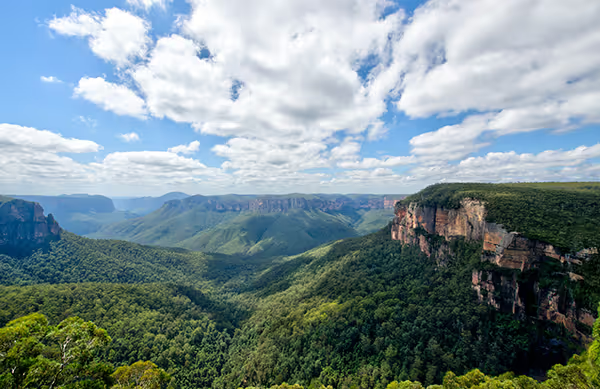
Heading

Heading 1
Heading 2
Heading 3
Heading 4
Heading 5
Heading 6
Lorem ipsum dolor sit amet, consectetur adipiscing elit, sed do eiusmod tempor incididunt ut labore et dolore magna aliqua. Ut enim ad minim veniam, quis nostrud exercitation ullamco laboris nisi ut aliquip ex ea commodo consequat. Duis aute irure dolor in reprehenderit in voluptate velit esse cillum dolore eu fugiat nulla pariatur.
Block quote
Ordered list
- Item 1
- Item 2
- Item 3
Unordered list
- Item A
- Item B
- Item C
Bold text
Emphasis
Superscript
Subscript

Building Collective Power Across Borders
The Counterdocket shifts power and authority away from institutions and toward communities. It puts conventional approaches to development on trial, treating lived experience as evidence, centering women and affected communities as knowledge holders, and connecting local struggles to the global systems that shape them.
By creating a collective resource rooted in people’s realities—not institutional narratives—it reimagines accountability as grounded in community knowledge, experiences, and decision making.


“This is a political invitation to reclaim our collective imagination, challenge systems that perpetuate injustice, and reimagine development in ways that place communities, care and justice at the center.”
— JASS (JUST ASSOCIATES)
“We, as migrants, are witnessing the land confiscation and monopolisation that are increasingly massive. Many peasants and minority ethnic group Indigenous communities are being evicted from their land. The IMF-World Bank also strengthened their policies to control the workers, to control the workers' rights, such as low wages, create labor flexibility, and the eradication of labor union or union busting. The IMF World Bank development agenda is worsening our future and offers no guarantee of improvement in life in our home country.”
— INDONESIAN MIGRANT WORKERS UNION, ASIA PACIFIC FORUM ON WOMEN, LAW AND DEVELOPMENT
“The solidarity we build in spaces outside the bank's formal mechanism is worth more than any investment portfolio. It's immeasurable. It’s the spaces where collective resistance is an alternative and where the foundations of a just and humane future are laid.”
— INTERNATIONAL ACCOUNTABILITY PROJECT
“We live in a world where there is no single movement, no single organization, or even a country that can actually challenge this international financial system. So, we must come together, stand together across all the borders, all the regions. And strengthen our collective voice, and demand for accountability from these two institutions.”
— ESCR-NET
Your voice counts!
Let's build a collective resource of lived experiences, resistance, and community-led alternatives across the world.
Submit cases related to impacts of IMF-World Bank projects and programmes to communities.
People around the world can participate by submitting stories, videos, photos, and voice recordings through this platform. Each entry needs a short written piece covering: what was promised, what the reality has been, and how communities would do it differently.
Submissions must focus on specific IMF-World Bank projects and policies in the Global South, whether legacy, active, or approved/proposed projects, targeting agriculture/land/seed policies, infrastructure and energy, labour agenda, economic structural policy and debt, or militarisation.
A Public Tribunal
Join us in Bangkok, Thailand
In October 2026, the IMF and World Bank are holding their Annual Meeting in Bangkok. It is critical to make visible feminist and peoples’ demands and resistance, in the face of decades of imperialisim, corporate capture and destructive neoliberal policies.
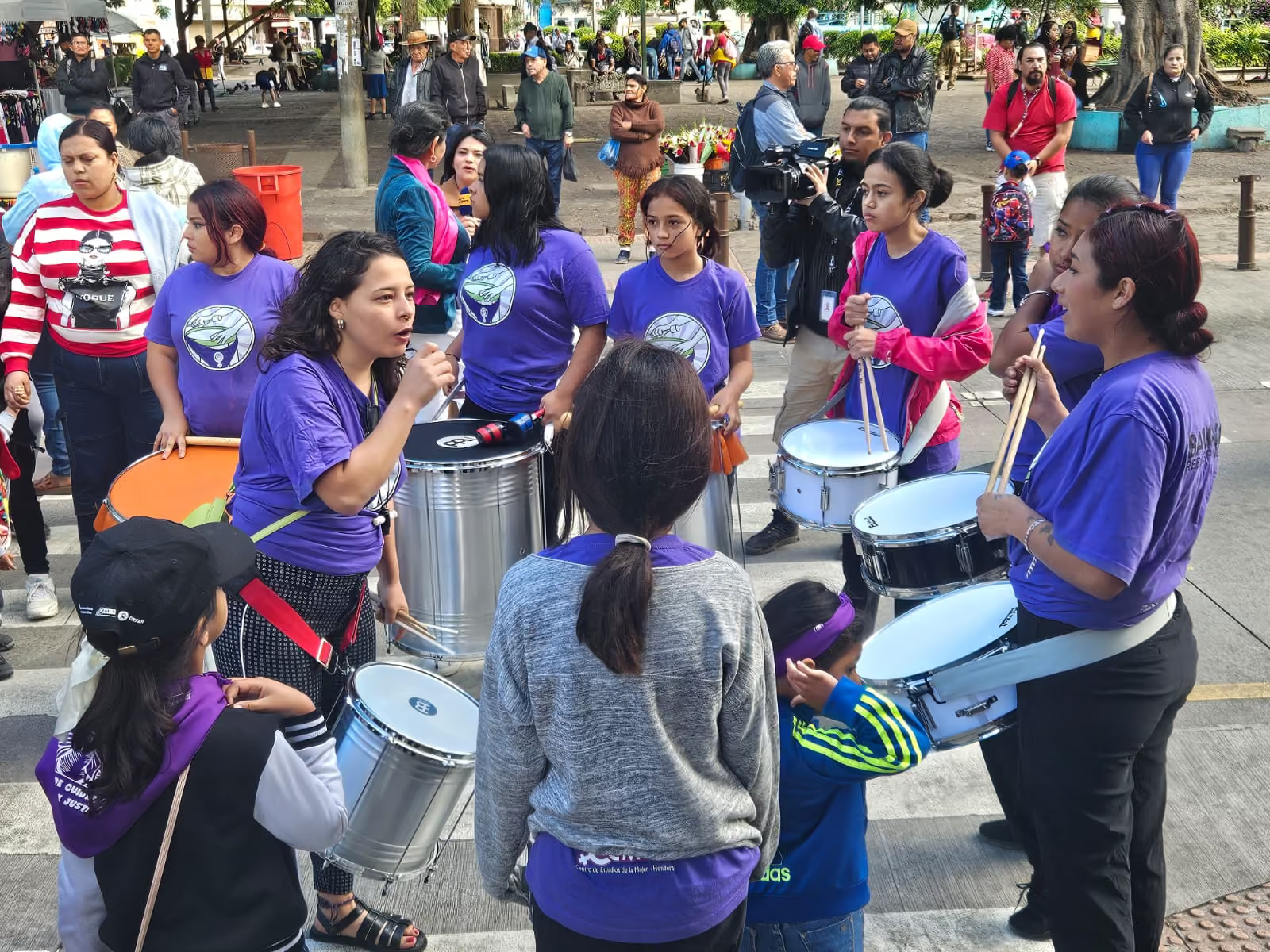

Feminist Festival of Alternatives and Resistance
Women Rebuild the World: Educate, Organise, Mobilise
Our Voices Count! A Counterdocket
A Counterdocket of testimonies from affected communities will be presented in a tribunal, mapping the impacts of IMF and World Bank policies and projects from across the world.
Global Day of Action
Women and communities commemorate International Rural Women’s Day by amplifying our calls for Development Justice and highlighting women’s crucial role in dismantling oppressive systems and rebuilding a just and feminist world.
A Public Tribunal
Spread the Word
Help bring the Counterdocket to your community. Share campaign materials, invite others to participate, and amplify the voices of communities demanding accountability.
Join the Alliance
A living resource of community testimonies documenting the impacts of extractive projects while highlighting community-led initiatives that demonstrate alternative models and visions of development.
This microsite is hosted by JASS (Just Associates) on behalf of participating organisations and groups. The knowledge, experiences, and perspectives shared here belong to the people and communities making contributions. JASS holds and amplifies these contributions, without claiming ownership or responsibility for the content of individual submissions.
Site hosted and maintained by JASS (Just Associates) and developed by Dapat Studio.


JASS (Just Associates)
Asia Pacific Forum on Women, Law, and Development (APWLD)
International Accountability Project
International Network for Economic, Social and Cultural Rights (ESCR-Net)




Aksi! for gender, social and ecological justice
Aliansi Masyarakat Rempang Galang Bersatu (AMAR-GB)
Amihan - National Federation of Peasant Women
Asian-Pacific Resource and Research Centre for Women (ARROW)
Association for Women's Rights in Development (AWID)
Cambodia Indigenous People's Organization (CIPO)
Cambodia Indigenous Women Association (CIWA)
Coalition of Human Rights in Development (CHRD)
Congolese Center for the Law of Sustainable Development (CODED)
Comissão das Comunidades Quilombolas do Vale do Jequitinhonha (COQUIVALE Brazil)
Earthlife Africa
Focus on the Global South
Forum Aktivis Perempuan Muda Indonesia (FAMM Indonesia)
Fundación Acue
Fundación Ambiente y Recursos Naturales (FARN)
IBON International
Indigenous People's Rights International
Indonesia for Global Justice (IGJ)
Inisiasi Masyarakat Adat (IMA)
Instituto Maira - Brazil
International Rivers
International Women's Alliance
Just Economy and Labor Institute Thailand
Kilusang Magbubukid ng Pilipinas (KMP)
Yayasan Lingkar Pemberdayaan Perempuan dan Anak (LAPPAN Maluku)
Lawyers Association for Human Rights of Nepalese Indigenous Peoples (LAHURNIP)
Magsasaka at Siyentipiko para sa Pag-unlad ng Agrikultura (MASIPAG)
MENAFem Movement for Economic, Development, and Ecological Justice
Narasha Community Development Group
Pakistan Kissan Mazdoor Tehreek (PKMT)
Persekutuan Perempuan Adat Nusantara (PEREMPUAN AMAN)
Perempuan Mahardhika
Recourse
Rivers and Rights
Roots for Equity
Serikat Perempuan Indonesia (SERUNI)
Solidarity of Trade Union Myanmar (STUM)
Southern Thailand Riders Foundation
Suriya Women's Development Centre
The Cambodian League for the Promotion and Defense of Human Rights (LICADHO)
Trend Asia
We Women Lanka
Women's Environment and Development Organization (WEDO)
Yayasan Pusaka Bentala Rakyat (PUSAKA)
View More
Join Us